Red Sea · Travel story
Returning to the Red Sea: six days of diving among reefs, wrecks and old memories
Some trips begin long before you get on a plane. For me, returning to the Red Sea meant going back to a place where I had worked years ago, but from a completely different moment in my life and in the way I dive.
On September 5, I left Barcelona for Sharm el-Sheikh via Istanbul. Ahead of me were six days of liveaboard diving on an Extended Northern Route, one night on land and the return to Barcelona in the early hours of the 13th.
For the liveaboard, I chose Blue Force 2. It was not a random choice: I worked with Blue Force for years and I know their way of working well. When you are going to spend almost a week living and diving from a boat, organization, safety and service quality make a huge difference.
But this time I was returning to the Red Sea looking for something quite specific: a change of scenery.
Leaving the caves and returning to the blue
My day-to-day work as an instructor takes place mainly underground, in the caverns and caves of the Riviera Maya. It is a type of diving I love, but it is also technical, precise and mentally demanding.
For this trip, I wanted almost the opposite.
I wanted blue. I wanted light. I wanted simple, long and relaxed dives. Shallow depth, warm water, good visibility and plenty of coral. Wake up, jump in, dive and enjoy without complications.
And that is exactly what I found.
Throughout almost the entire trip we had spectacular visibility, temperatures around 27-28 °C and currents ranging from mild to moderate. Our maximum depth was around 30 metres and every night we had the option of doing a night dive.
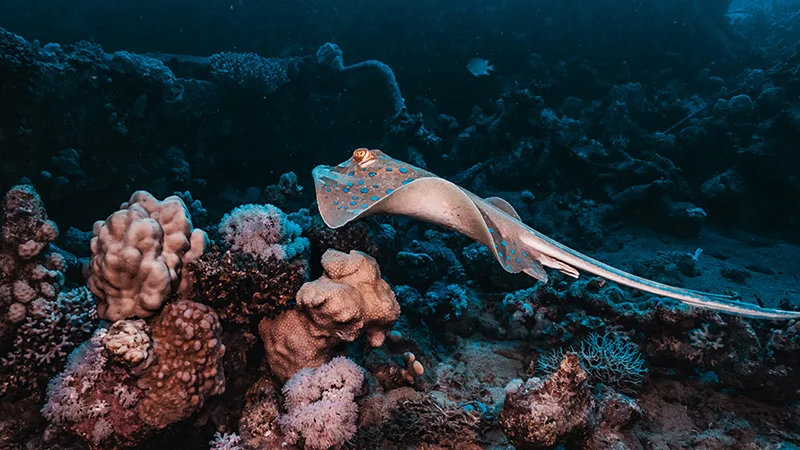
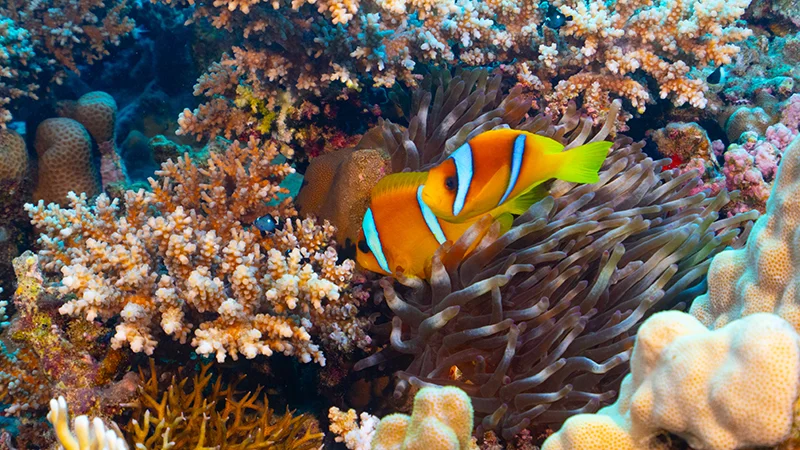
The condition and quality of the coral were, without doubt, one of the great highlights of the trip.
Ras Mohammed and the Strait of Tiran
We spent about a day and a half diving in the Ras Mohammed Reserve, one of the most iconic places in the Egyptian Red Sea.
We also visited the Strait of Tiran, diving its four main reefs: Jackson, Woodhouse, Thomas and Gordon Reef.
It was exactly the kind of diving I had been looking for: big walls and coral gardens, plenty of light, easy navigation and time to observe.
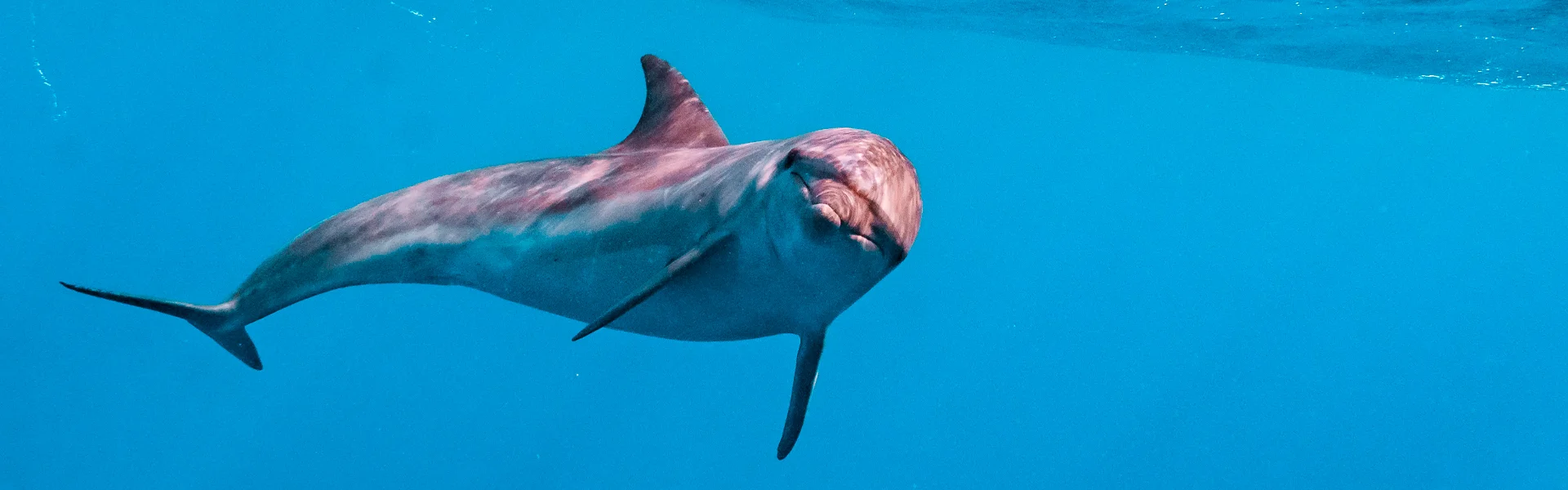
If I had to ask for something more from the trip, it would probably have been a little more large marine life. We saw Napoleon wrasse, but none especially big, and I would have loved to see a few more turtles.
But if megafauna was not the main highlight, the coral more than made up for it. Some areas were simply spectacular.
And then there were the wrecks.
Dunraven and Beacon Rock
Dunraven was one of those sites that gave the trip another dimension.
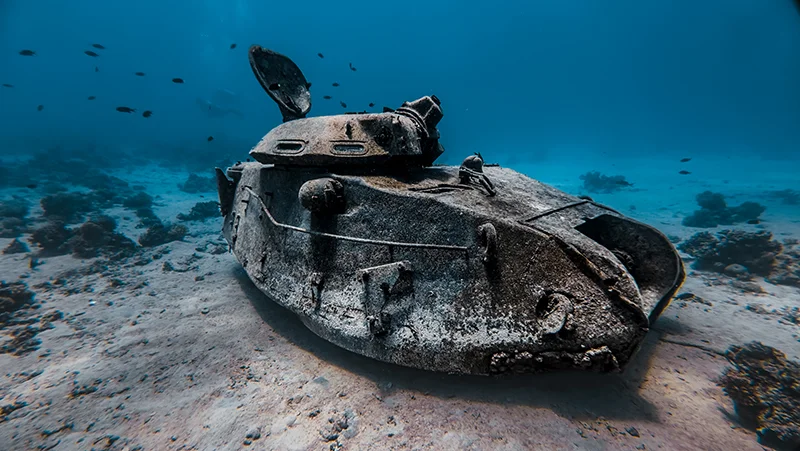
After so many days of reef diving, entering sunken structures again inevitably took me back to my own territory. Being able to explore a wreck, play with entries and exits and create different images made those dives some of the most enjoyable of the trip.
We also spent a couple of nights in the Beacon Rock area, which allowed us to enjoy the site both during the day and on night dives.
But there was still one place left that had a special meaning for me.
Returning to the Thistlegorm
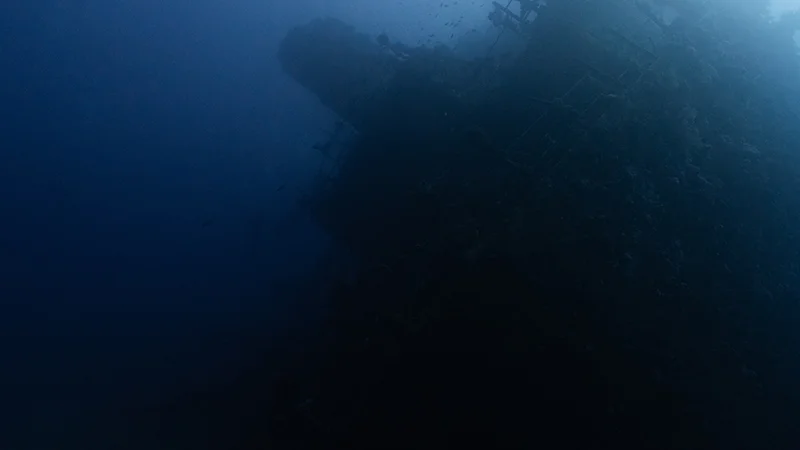
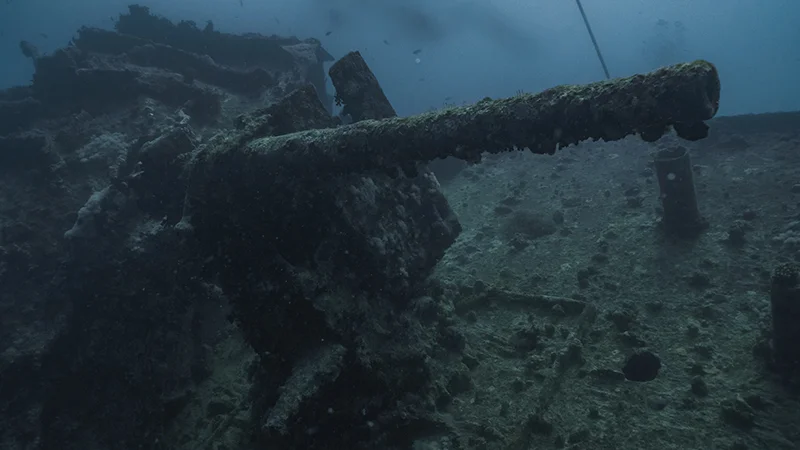
We spent a full day on the SS Thistlegorm and did four dives on the wreck.
And for me it was not simply a matter of diving a sunken ship again.
It had been about six, seven or eight years since I had worked in this part of the Red Sea. Descending again and finding myself in front of the Thistlegorm after so many years was intense.
Four dives allow you to see it in a different way. You do not get that feeling of having to see absolutely everything in a single dive. You can explore it, observe it and enjoy its different areas much more calmly.
This trip also had another very special element for me: I was travelling with my brother Tito.
Being able to shoot photo and video together underwater turned some moments into particularly good memories. We took photographs inside and around the wrecks, played with positions and backshots, and somehow brought to the Red Sea a small part of the kind of images and diving we usually do in Mexico.
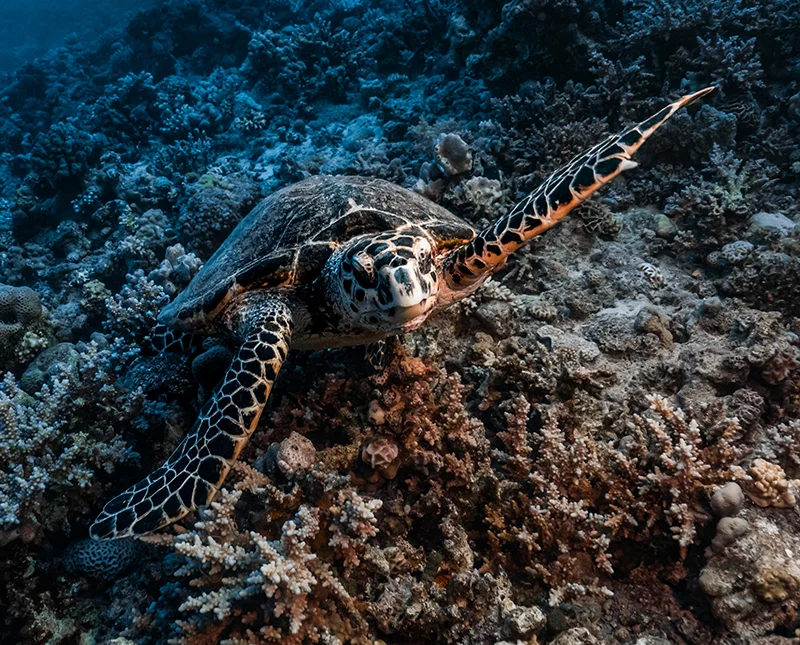
And among all those moments there was a turtle that was especially generous with our cameras and ended up becoming one of my favourite memories of the trip.
Six days living to dive
There is something about liveaboards that I love: for a few days, the world becomes incredibly simple.
You wake up. You dive. You eat. You rest. You dive again.
Again.
And again.
Until the day ends with another entry into the water for a night dive.
There are no daily transfers and not too many decisions to make. The boat moves while you rest and, when you wake up, a new dive site is waiting for you.
For someone who truly enjoys being underwater, that routine has something very special about it.
And now we want to return with SCUBALUX
I came back from the Red Sea with a very clear feeling that it is a trip I would recommend without hesitation.
Not because every dive has to be extreme or because you need to find sharks, turtles or huge animals on every dive. In fact, one of the things I enjoyed most was the opposite: long, relaxed dives in warm water, among reefs full of coral, combined with some truly exceptional wrecks.
And perhaps that is why, while I was there, the idea of returning began to take shape.
But next time it will be different.
From July 31 to August 8, 2027, we will run our first Red Sea trip with SCUBALUX.
We will return to the Northern Route, passing through the Strait of Tiran, Ras Mohammed and, of course, the Thistlegorm. It will be six full days of liveaboard diving, with three or four dives a day and the possibility of night dives.
This time I will not return only as a diver.
I will return taking a group of people with me to show them a place that, many years after having worked there, reminded me of something very simple:
Sometimes you do not need to look for more difficult diving. You just need to enjoy the blue again.
Would you like to join us in the Red Sea in 2027?
From July 31 to August 8, 2027, we return to the Red Sea with SCUBALUX.
Red Sea · July 31 to August 8, 2027
If you want to see the organised trip information with Scuba Alux, you can check the PDF with the route, dates and practical details.
View trip PDF