Responsible tourism · 2026 Guide
How to Swim with Whale Sharks Responsibly
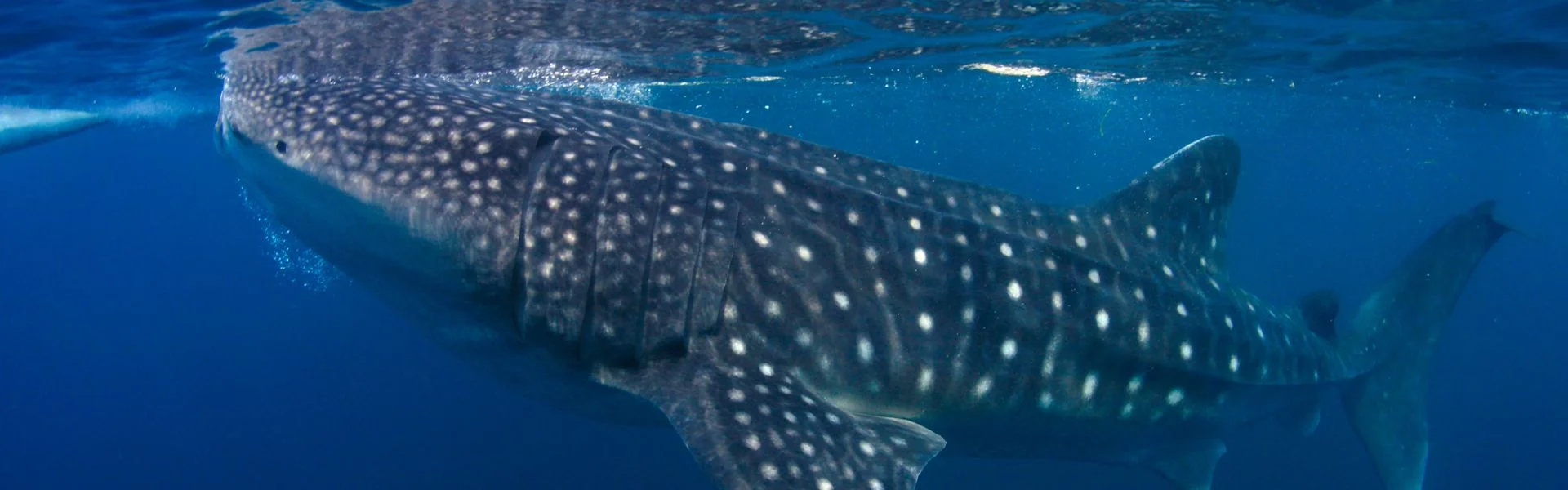
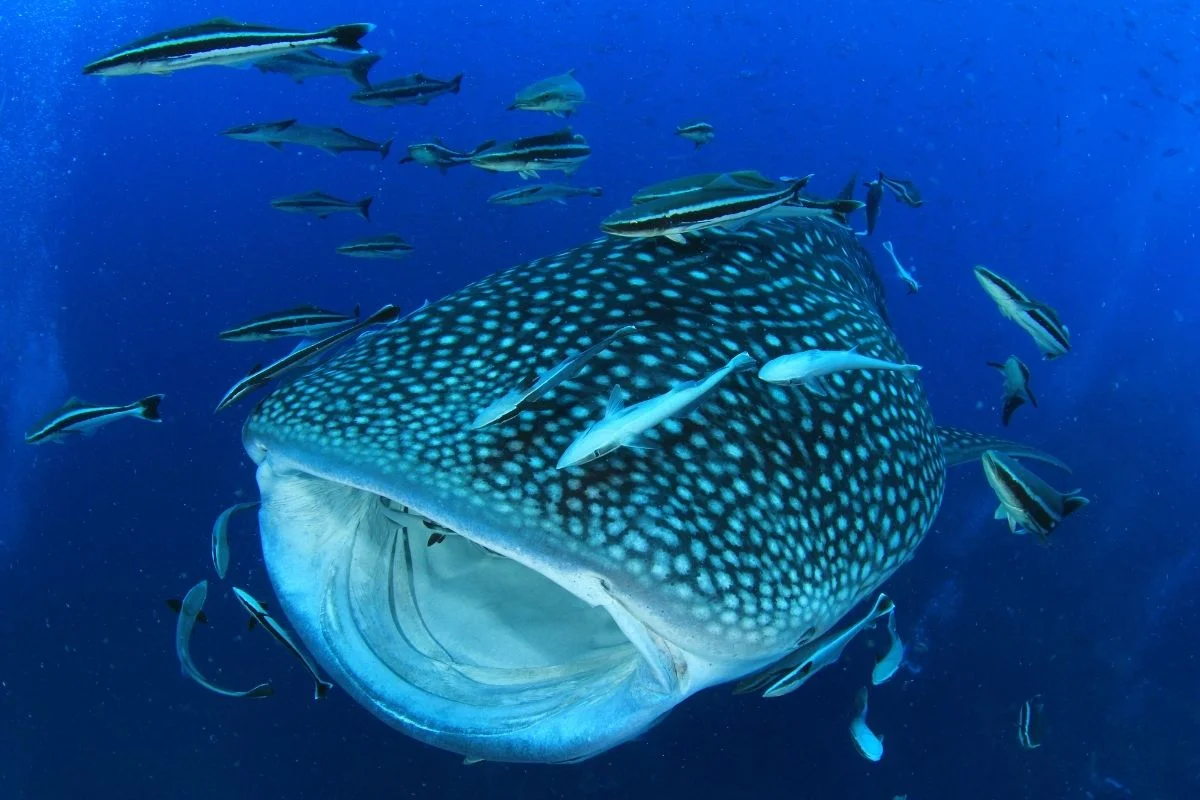
The whale shark (Rhincodon typus) is the largest fish on the planet. Seeing one in the water is one of the most powerful experiences in snorkelling. But precisely because it is an extraordinary animal, the way we approach it matters. A great deal.
The Riviera Maya has specific regulations to protect these animals during encounters. These are not suggestions — they are mandatory rules. And beyond the law, there is a set of best practices that make the difference between an encounter that respects the animal and one that stresses it, even if both look the same from the outside.
This article explains what to do, what not to do and why each rule exists. If you have already booked your tour, read it before getting in the water. If you are still planning, it will help you choose the right operator.
Why the whale shark needs special protection
The whale shark is classified as an endangered species by the IUCN. Its global population has declined by more than 50% over the last 75 years due to fishing, boat strikes and habitat degradation.
The Riviera Maya hosts one of the world's largest seasonal concentrations of whale sharks each summer, drawn by spawning sailfish eggs and abundant plankton. It is a critical feeding ground. Whale shark snorkelling tourism can be compatible with conservation — but only when done correctly.
When tourism is unregulated, the opposite happens: repeated stress drives animals away from feeding areas and may cause them to stop visiting the region altogether. What is at stake is not just the tourist experience — it is the viability of the species in this ecosystem.
The official rules — Mexican regulations (SEMARNAT)
SEMARNAT (Mexico's Ministry of Environment and Natural Resources) establishes the following rules for whale shark encounters in Mexican waters:
| Rule | Detail |
|---|---|
| Minimum distance from body | 3 metres |
| Minimum distance from tail | 4 metres — a tail strike can cause serious injury |
| Max. people per animal | 8 people (including the guide) |
| Boats per animal | Maximum 2 simultaneously |
| Max. time in the water | 30 minutes per turn with the same animal |
| Touching prohibited | Absolutely prohibited — no exceptions |
| Camera flash | Prohibited |
| Sunscreen | Mineral biodegradable only — rash guard recommended |
| Artificial feeding | Prohibited — observation only |
What to do when you are in the water
Enter the water calmly
Splashing and sudden movements when entering the water alert the animal. Your guide will tell you exactly when to enter. Slip in gently, without jumping or making noise. The first few seconds determine whether the shark continues its path near you or moves away.
Swim alongside, never in front
Positioning yourself in front of an approaching whale shark forces it to swerve or dive. That interrupts its feeding and causes stress. The correct position is alongside the animal, swimming at its pace, without intercepting its path. If the shark is heading towards you, move to the side — never backwards, blocking its advance.
If the animal approaches, stay still
Sometimes a whale shark will decide to come close. When that happens, stay completely still. Let it pass. The closeness you feel in that moment — sometimes less than a metre away — is the result of the animal not perceiving you as a threat.
Respect the rotation system
Responsible operators rotate groups so that everyone gets time in the water without saturating the animal. When the guide signals it is time to return to the boat, do so without question. Extending your time beyond the assigned turn is not only unfair to the rest of the group — it is harmful to the shark.
What NOT to do — The most common mistakes
Most incidents are not malicious. They are the result of excitement, inexperience or simply not knowing. These are the mistakes that happen most often:
| ❌ Do not do | Why it is a problem |
|---|---|
| Touch the shark even briefly | Damages the protective mucus layer. Prohibited by law. |
| Try to ride it or grab the fin | Causes severe stress. The animal may dive suddenly. |
| Use camera flash | Can blind the animal and alter its feeding behaviour. |
| Shout or make loud noises in the water | Whale sharks are sensitive to vibrations. Noise drives them away. |
| Position yourself between the animal and the surface | Blocks its access to surface plancton. Directly interrupts its feeding. |
| Ignore the guide's instructions | The guide knows the animal's behaviour. Their instruction is always the priority. |
How to choose a responsible operator
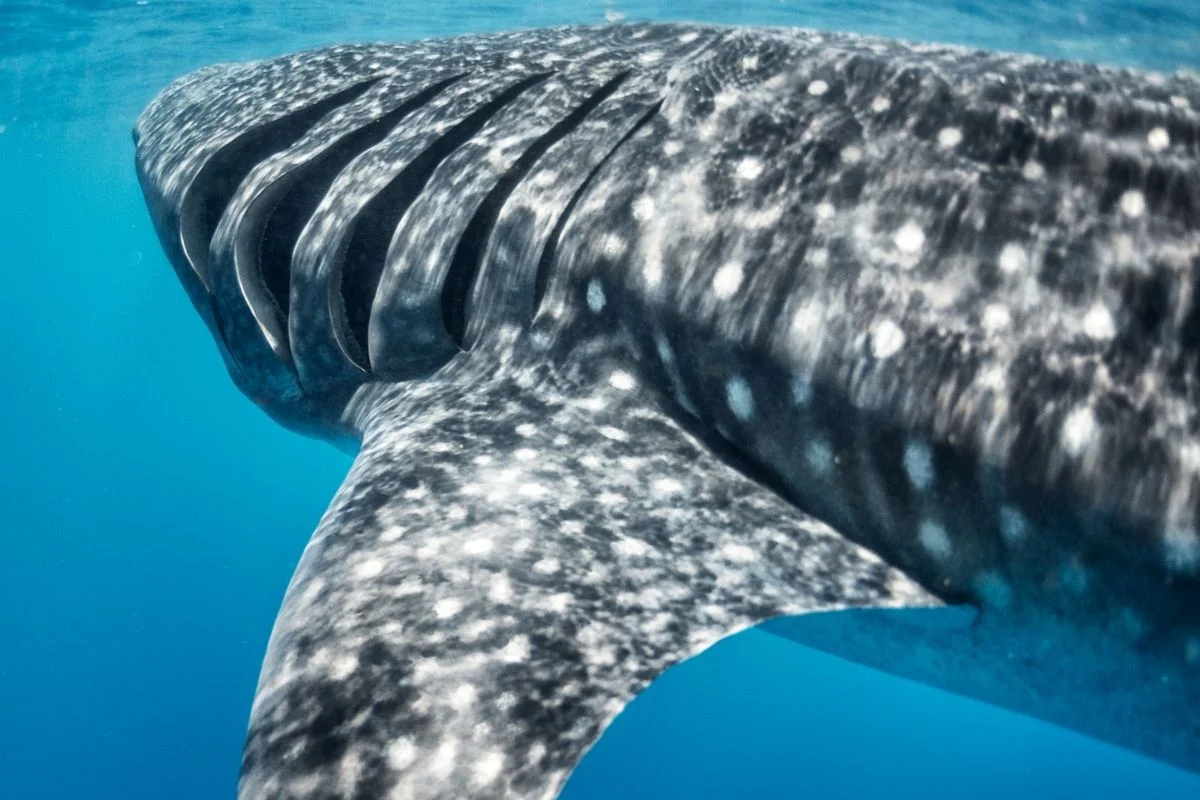
The experience you have with the whale shark depends largely on the operator you choose. These are the signs of an operator that works correctly:
- They give a full briefing before entering the water — not a formality, but a sign they take the rules seriously.
- They limit group size to a maximum of 8 people per animal.
- They respect the rotation system and do not keep the group in the water beyond the regulated time.
- They provide rash guards or inform clearly about sunscreen requirements.
- They have guides with real experience in animal behaviour, not just people who know the area and can swim.
At Scuba Alux all whale shark tours include a full briefing, small groups and guides with specific training in marine animal behaviour. Our goal is for the animal to barely notice your presence — and that is what makes the encounter truly memorable.
Want to swim with whale sharks this summer?
Season in the Riviera Maya runs from May to September, peaking in July and August. See the whale shark tour from Playa del Carmen and contact us to organise your trip.
We answer your questions
Can you touch a whale shark?
No. It is prohibited by Mexican law and harmful to the animal. Whale sharks have a protective mucus layer that human contact damages. Observing without touching is the only correct way to interact.
How close can you get to a whale shark?
3 metres from the body and 4 metres from the tail. If the whale shark approaches you on its own, stay still and let the animal decide.
Can you use a camera flash?
No. The flash can stress the animal and cause it to move away. Modern cameras capture excellent images in natural surface light — no flash needed.
What sunscreen can you use?
Only mineral biodegradable sunscreen (zinc oxide or titanium dioxide). The best option is a lycra rash guard that protects without any cream.
How many people can be in the water at the same time?
A maximum of 8 people per whale shark, including the guide. Responsible operators respect this limit and rotate groups.