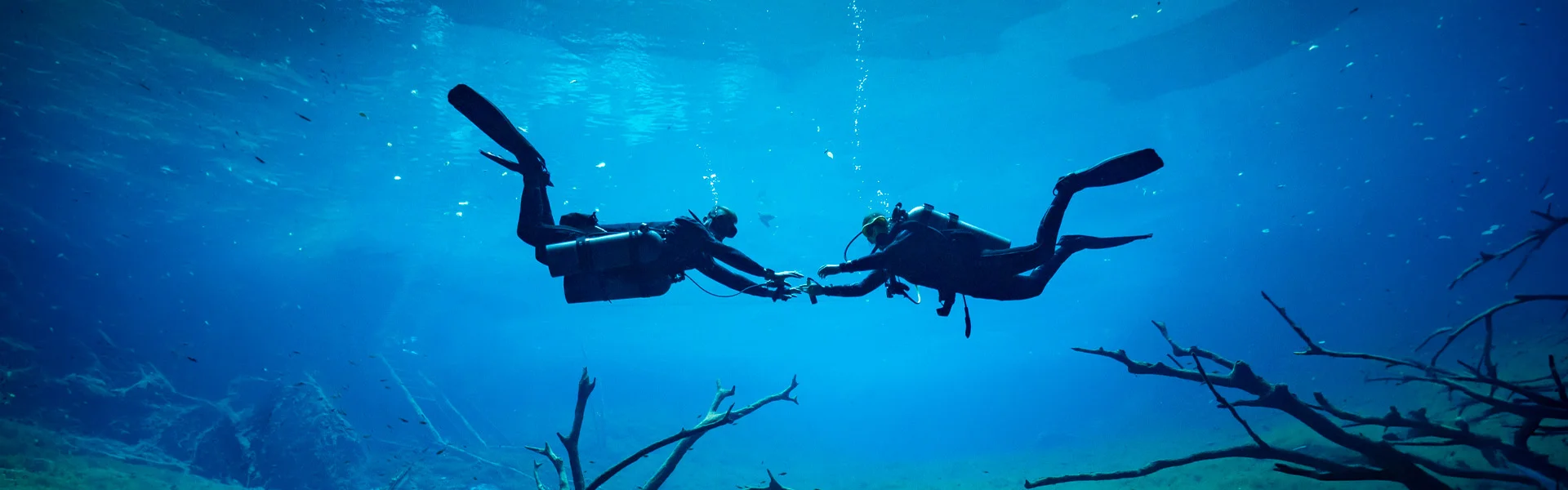
Diving technique · Complete guide
Buoyancy Control in Diving: Why It Matters and How to Improve It
Buoyancy control is one of the most important skills in diving. Whether you are just starting out or have hundreds of dives logged, knowing how to stay stable underwater completely changes the experience.
When a diver has good buoyancy control, they move with less effort, use less air, better protect the environment and enjoy every dive more. Poor buoyancy, on the other hand, leads to constant up-and-down movements, accidental contact with the bottom, stress, fatigue and a feeling of being out of control.
In destinations like Playa del Carmen, where you can combine Caribbean reefs like Cozumel and cenote diving, this skill becomes even more important. This guide explains why mastering buoyancy matters, how it affects your safety, your air consumption and your respect for the environment.
What is buoyancy in diving?
Buoyancy is a diver's ability to maintain a neutral, stable position in the water — neither sinking nor rising uncontrollably. In simple terms, it is what allows you to stay suspended at a given depth without having to kick constantly.
There are three types of buoyancy:
- Positive buoyancy: the diver tends to rise or float.
- Negative buoyancy: the diver tends to sink.
- Neutral buoyancy: the diver stays stable in the water.
The goal during a dive is to achieve neutral buoyancy. Several factors contribute: the amount of weight, correct use of the BCD, breathing, body position and the diver's experience. It may seem complicated at first, but with practice and good guidance it becomes a natural skill.
Why mastering buoyancy improves your safety
Good buoyancy is directly linked to underwater safety. When you are in control of your position, you can maintain your planned depth, avoid rapid ascents and react better to any situation.
One of the most common mistakes among inexperienced divers is over-relying on the BCD to correct every small depth change. This can cause constant up-and-down movements. An experienced diver learns to use breathing as the primary adjustment tool instead.
Mastering buoyancy helps you maintain a stable depth, avoid uncontrolled ascents, reduce the risk of touching the bottom, save energy during the dive, maintain better visual contact with the guide and manage safety stops more effectively.
Less air consumption and more time underwater
One of the clearest benefits of improving buoyancy is reduced air consumption. When a diver lacks control, they tend to kick more than necessary, move their arms too much, constantly change depth and breathe less calmly — all of which increases physical effort and, as a result, air consumption.
When you are well balanced, you move with less effort, breathe more calmly, use less energy and make better use of your bottom time. It is not just about staying down longer — it is about feeling more comfortable, more present and more relaxed throughout the entire dive.
Protecting the reef and the underwater environment
Buoyancy is also fundamental to protecting the underwater environment. A diver with poor control may accidentally hit the bottom with their fins, stir up sediment, touch coral or get too close to fragile organisms.
In reef areas like Cozumel, buoyancy control is essential to avoid touching coral and disturbing marine life. Reefs are living, sensitive ecosystems — maintaining the right distance allows you to observe without interfering. Good buoyancy is therefore a way to dive more responsibly.
More comfort, control and confidence during the dive
Buoyancy does not only affect technique — it also changes how a diver feels underwater. When you are not in control, you can feel insecure, tired or frustrated. Rising unintentionally, sinking too deep or failing to maintain a stable position can create tension, and when there is tension your breathing changes and everything becomes harder.
This is especially relevant for beginner divers, people who have not dived for a while, travellers diving in a new environment and divers entering cenotes for the first time. Confidence underwater does not appear overnight — it is built dive by dive, and buoyancy is one of its most important foundations.
Buoyancy in cenotes
Buoyancy in cenotes deserves special attention. Diving in cenotes is a unique experience, but it also requires a high level of respect for the environment and for technique. Cenotes typically have spectacular visibility, very calm water and natural formations that have been there for thousands of years — which is precisely why the diver's control must be very precise.
Poor finning or unstable buoyancy can stir up sediment, reduce visibility or cause accidental contact with walls, the bottom or formations. In cenotes, the goal is not speed — it is calm, precision and control.
Finning technique is also very important in cenotes. More controlled, horizontal techniques such as the frog kick help reduce the impact on the bottom. Before diving in cenotes, it is advisable to have comfortable buoyancy control and always follow the guide's instructions.
Buoyancy on Caribbean reefs
In the Caribbean, buoyancy is equally important, even though the environment is different. On a reef dive, good buoyancy allows you to move above the coral without touching it, observe marine life without invading its space and stay comfortable even in mild current.
In areas like Playa del Carmen or Cozumel, the bottom combines sand, coral, small walls and zones with very active marine life. The calmer and more stable you are, the less you disturb the behaviour of the animals around you.
How to improve your buoyancy control
Check your weighting
Carrying too much weight is one of the most common mistakes. If you are over-weighted, you will need to add more air to your BCD to compensate, making depth changes harder to control. Correct weighting allows you to descend safely without constantly depending on the BCD.
Work on your breathing
Breathing is a fundamental tool for making small buoyancy adjustments. When you inhale, you tend to rise slightly; when you exhale, you tend to sink. Learning to breathe slowly and in a controlled way helps you maintain a more stable position and make small depth adjustments without touching your BCD.
Maintain a good horizontal position
A horizontal body position reduces drag and prevents your fins from hitting the bottom. It also allows you to move with less effort and have more precise depth control.
Make small adjustments
There is no need to constantly inflate or deflate the BCD dramatically. The ideal approach is to make small adjustments and wait a few seconds to see how your body responds. Buoyancy requires patience — many beginner divers correct too quickly and too much.
Practise with a professional
A guided dive, a refresher or a technique-focused course can make a big difference. Sometimes small changes in weighting, posture or breathing completely transform the experience. At Scuba Alux we offer buoyancy workshops and courses for all levels — get in touch and let us take your diving to the next level.
Common mistakes when working on buoyancy
Improving buoyancy also means identifying frequent mistakes. The most common ones are: carrying too much weight, kicking constantly, using hands to correct position, inflating and deflating the BCD abruptly, breathing fast due to nerves or tension, looking only at the bottom without monitoring depth and not maintaining a horizontal position.
The good news is that all of these mistakes can be corrected with practice and proper guidance. Buoyancy is not a skill reserved for expert divers — it is a technique every diver can and should work on.
Conclusion
Mastering buoyancy control in diving is one of the best investments you can make as a diver. It improves your safety, reduces your air consumption, protects the environment and allows you to enjoy every dive with more calm and confidence.
In destinations like Playa del Carmen, this skill becomes even more important because you can dive in very different environments — cenotes and Caribbean reefs. Each has its own characteristics, but all of them require control, respect and good technique underwater.
Planning your next diving trip to Playa del Carmen?
Contact Scuba Alux and we will help you choose the right dives for your level — from cenotes to reefs and special trips to Cozumel.
We answer your questions
Why is buoyancy control so important in diving?
Buoyancy control is important because it allows you to maintain a stable depth, reduce air consumption, avoid uncontrolled ascents and protect the underwater environment. It also helps you dive with more comfort and confidence.
How can I improve my buoyancy underwater?
You can improve your buoyancy by adjusting your weighting correctly, breathing in a controlled way, maintaining a horizontal position and making small adjustments with your BCD. Practising with an instructor also helps a lot.
Is buoyancy control important for diving in cenotes?
Yes. In cenotes, buoyancy control is especially important because it helps avoid contact with the bottom, walls or natural formations. It also prevents stirring up sediment and allows you to enjoy the dive safely and respectfully.
What level do I need to work on my buoyancy?
Buoyancy is a skill any diver can improve regardless of level. From Open Water divers to those with hundreds of dives, everyone benefits from working on technique with a professional.
Want to improve your buoyancy in Playa del Carmen?
At Scuba Alux we help you dive better, with more safety and confidence. Cenotes, reefs and Cozumel are waiting for you.