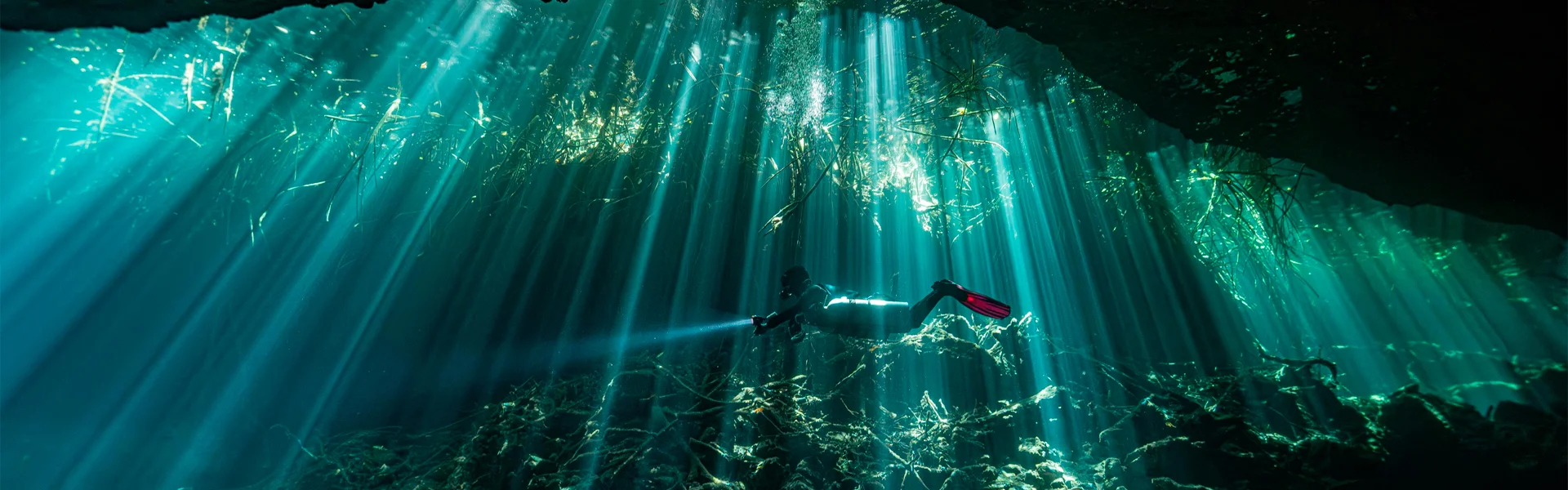
Cenote diving from Playa del Carmen combines crystal-clear water, ancient formations and routes that vary greatly from one site to another. We select each cenote according to your certification, recent experience, buoyancy control and the type of landscape you want to explore.
What is a cenote?
Cenotes are natural sinkholes formed when the limestone roof of an underground cavern collapses, exposing the freshwater system beneath. The Yucatan Peninsula contains thousands of them, and many are connected by underwater rivers stretching for kilometers.
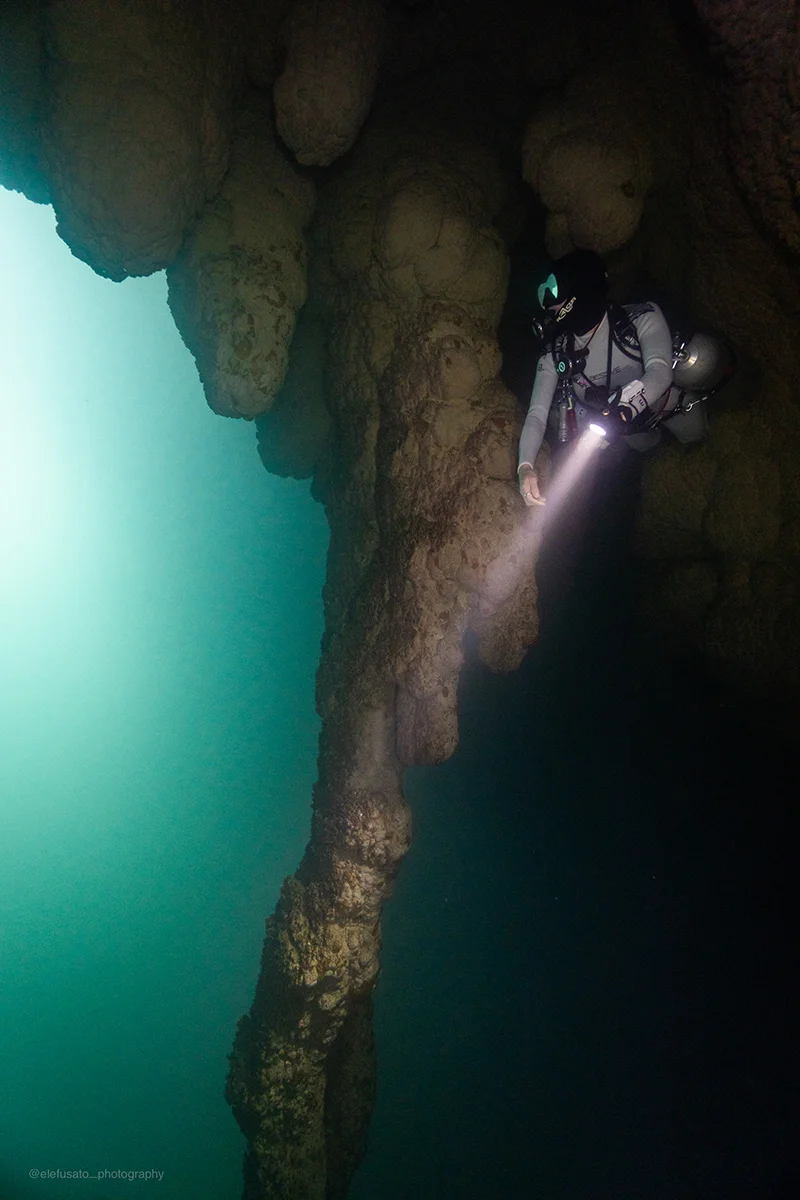
For divers, this means an absolutely unique playground: ancient rock formations, stalactites and stalagmites carved over millennia, and water so clear that visibility can exceed 50 meters on a good day.
Cavern vs. cave diving: the key difference
Cenotes offer two types of diving experiences, and it's important to understand the difference.
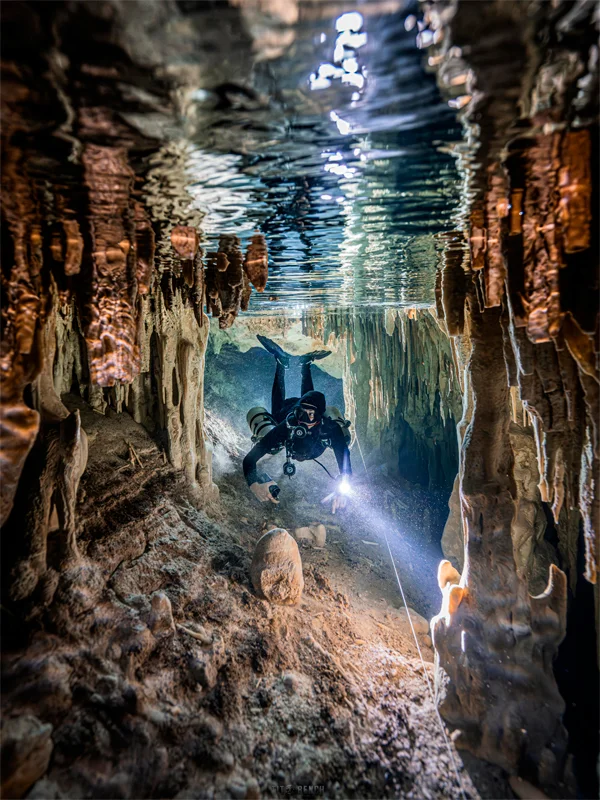
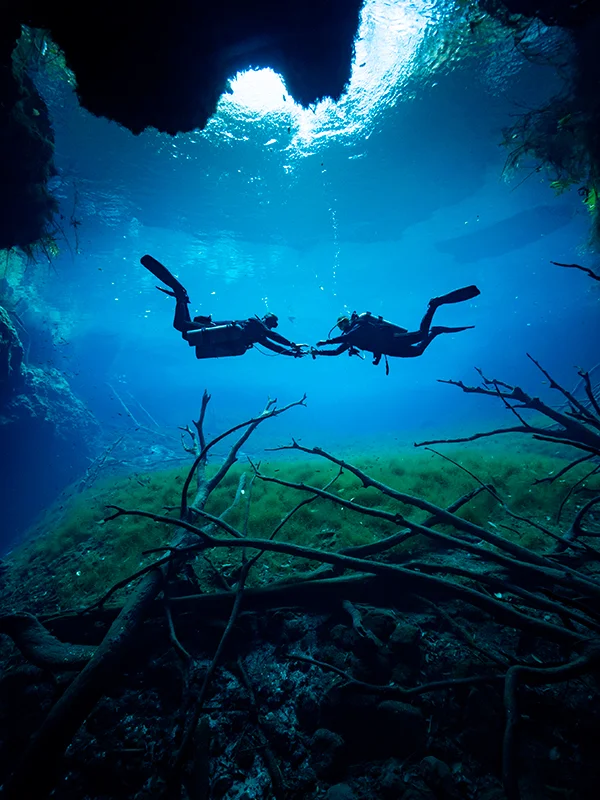
Cavern diving takes place in overhead environments where natural light is always visible and the exit is within easy reach. In Mexico, cavern guidelines are installed so that the surface is always at most 60 linear meters away. Open Water and Advanced divers can safely enjoy cavern diving with a guide, using their normal single-tank configuration.
Cave diving goes deeper into the underground system, often beyond natural light and beyond the 60-meter limit. This requires specific technical training and a sidemount or doubles configuration.
What certification do I need to dive in cenotes?
This is the most common question. The simple answer: with an Open Water Diver certification, you can already access some of the most impressive cenotes in the Riviera Maya.
| Certification | Accessible cenotes | Type of diving |
|---|---|---|
| No certification | Casa Cenote | First open-water diving experience |
| Open Water Diver | Chac Mool, Jardín del Edén, Chikin Ha, Dos Ojos, Casa Cenote and Carwash | Cavern dives with access to natural light at all times |
| Advanced Open Water | El Pit, Nicte Ha, Angelita, Zapote, Maravilla, Taak Bi Ha, Taak Bi Luum, Dream Gate, Nohoch + all of the above | Cavern dives in areas with limited natural light, to a maximum depth of 30 metres |
| Cave Diver | Hundreds of cenotes. Mexico is a cave diving paradise | Cave dives from Intro to Cave level, with complex navigation, decompression and different configurations such as open circuit or rebreather |
Which cenote suits you?
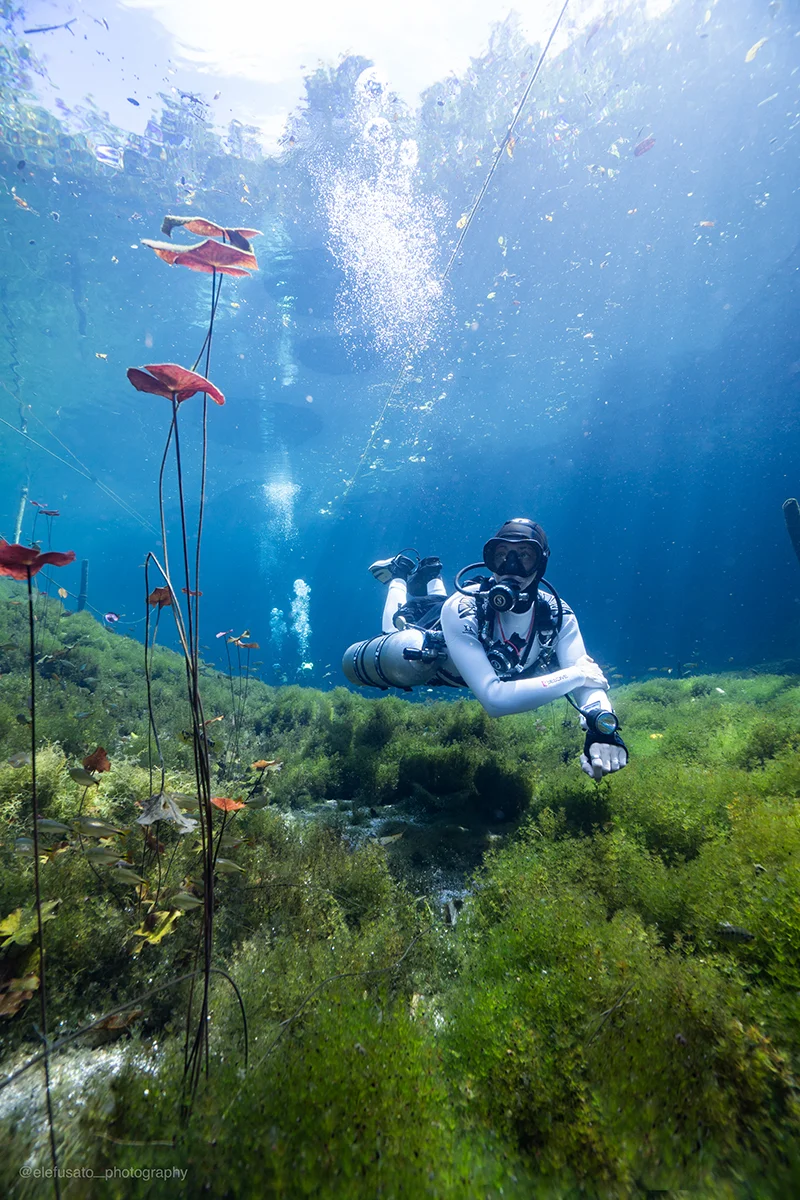
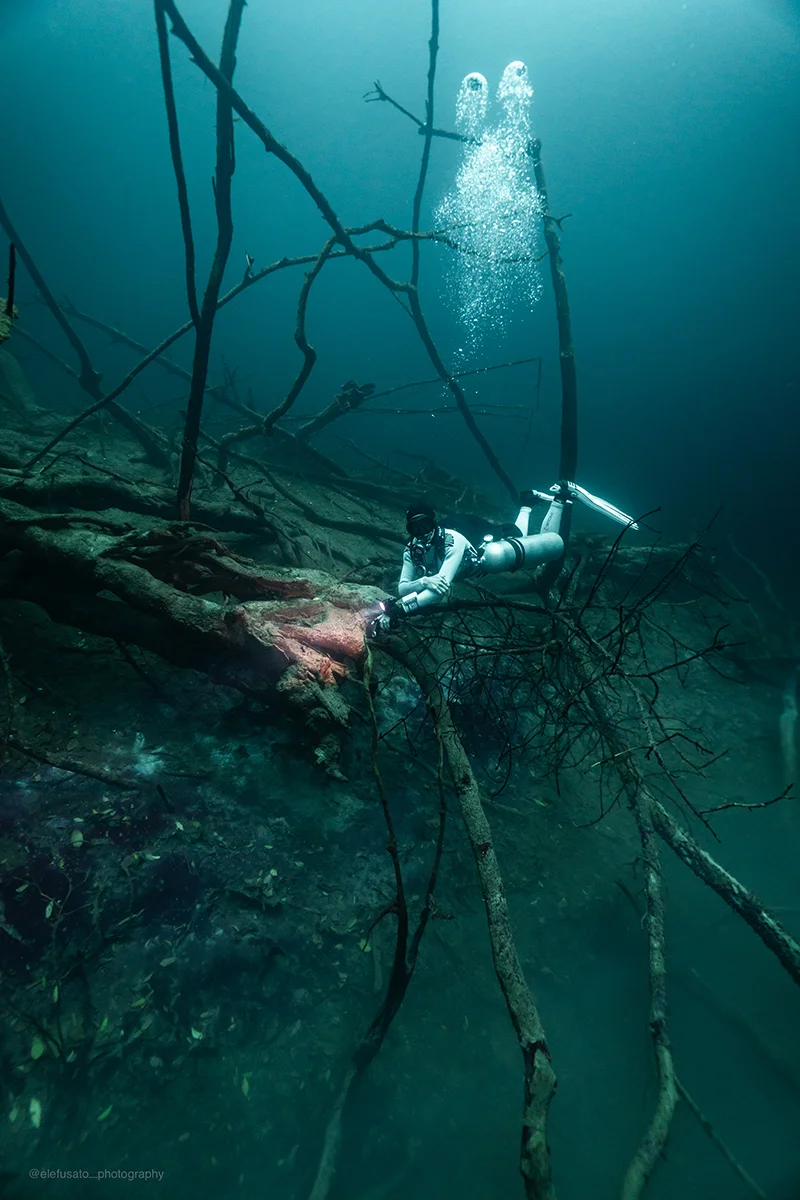
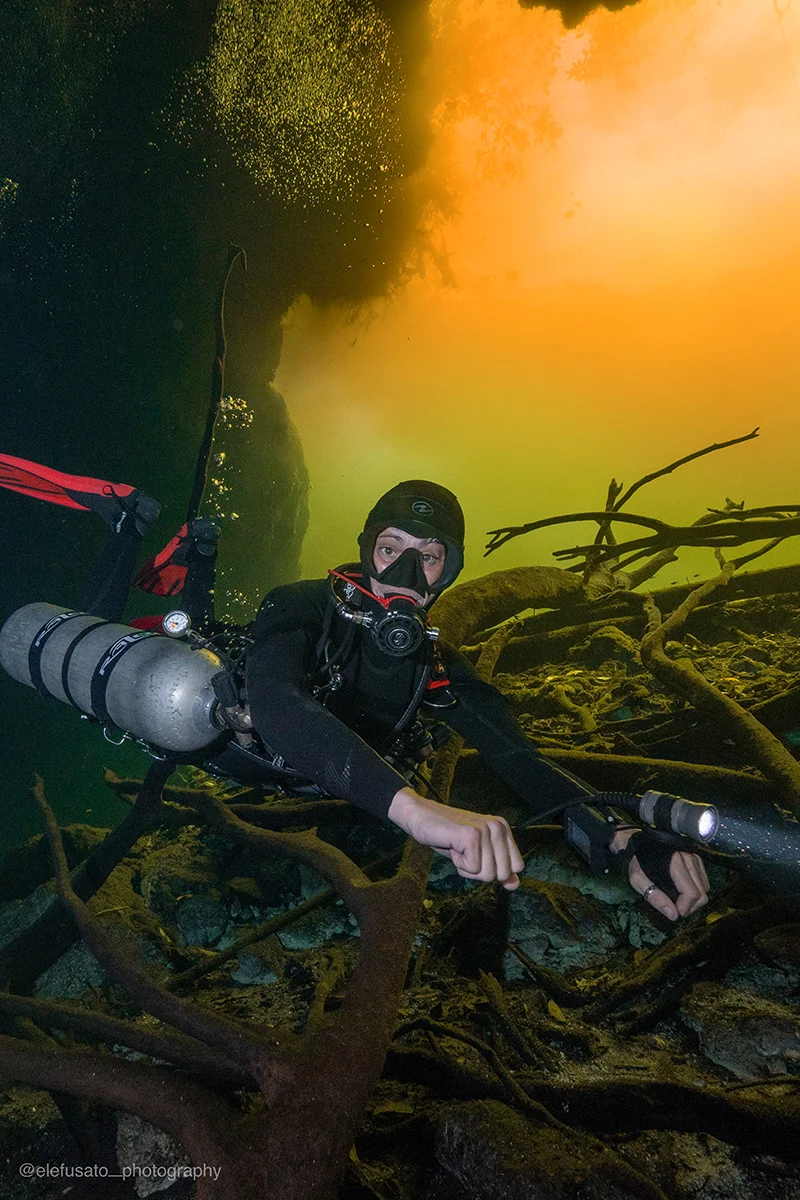
Cenotes vary in depth, natural light and difficulty. Read our cenote guide by diver level or contact us to build a combination around your experience.
Practical information
Water temperature: 25-26 °C year-round. A 5 mm wetsuit is recommended.
Visibility: between 30 and 60 metres depending on the cenote — far greater than most ocean dives.
Dives per day: two morning dives, with the option of a triple-tank day.
Transfers: Scuba Alux picks you up at your hotel and drops you back after the activity.
Groups: kept small by centre policy, ensuring close individual attention underwater.
Planning: before the trip we review your certification, experience, buoyancy control, date of your last dive and preferences.
Choose your dive centre carefully
Choosing an experienced dive centre and cavern guide is essential to enjoy the experience safely. At Scuba Alux, our instructors know the area and its cenotes in depth.
Two ways to explore
We answer your questions
Can I dive in the cenotes with a recreational level?
Yes. There are more than 15 caverns where you can dive with a recreational level (from Open Water) using a single tank configuration, exactly the same as the one you use for ocean diving.
What is the difference between a cavern and a cave?
A cavern is an overhead environment with access to natural light. In Mexico, cavern guidelines are installed so that the exit is always at a maximum of 60 linear meters, making these cavern dives completely safe as long as the chosen dives match the diver's certification level (Open or Advanced).
How do I choose cavern dives based on my level?
Leave that to us. When you contact Scuba Alux, we'll ask about your certification level, previous experience, and personal preferences. Based on that, we'll design the dive plan that best suits you so you enjoy the experience safely.
What is the water temperature in the cenotes?
Water in the cenotes stays between 25 °C and 26 °C (77-79 °F) year-round. A 5 mm wetsuit is recommended for comfort during one-hour dives. If you tend to feel cold faster, a hood or thermal layer helps.
Are all cenotes the same?
Not at all. Each cenote is completely different. If you do several days of cenote diving, get ready for a totally different experience every day. That variety is one of the biggest attractions of the cenotes.
If there's no marine life in the cenotes, is it worth diving in them?
The main attraction of cenotes is not wildlife, but they do host a delicate ecosystem with freshwater turtles, fish species, crabs and even crocodiles. Beyond that, cenotes offer hydrogen sulfide clouds, light beams entering from above, crystal-clear water, and limestone formations like stalactites and stalagmites that make Mexico an incredible diving destination.
Are there two dives per day if I book a cenote experience with Scuba Alux?
Yes. Two morning dives as is customary, or triple tank if you prefer. Some cenotes like Chac Mool and Dos Ojos allow two different dives without changing site; other combinations involve changing cenote between dives. We pick you up at your hotel and drop you back at the end. All you have to worry about is enjoying!
Check availability for cenote diving
Tell us your certification, experience, last dive and dates. We'll recommend the cenotes that best suit you.