Marine life guide · Cozumel
What Marine Life Can You See Diving in Cozumel?
Cozumel is one of the best windows into the Mexican Caribbean for spotting marine life underwater. Its reefs are part of the Mesoamerican Reef System —the second largest in the world— and much of the southwest coast falls within the Cozumel Reefs National Park, a protected area where fishing is restricted. You can feel it underwater: biodiversity is dense, visible and accessible at nearly every dive site.
In this article we cover the species you can expect to see, when they are most likely to appear and which parts of the reef to focus on depending on what you are hoping to find.
Common marine life sightings in Cozumel
This is the reference table with the species you can regularly see on dives in Cozumel throughout the year:
| Species | Jan | Feb | Mar | Apr | May | Jun | Jul | Aug | Sep | Oct | Nov | Dec |
|---|---|---|---|---|---|---|---|---|---|---|---|---|
| Green turtle | ● | ● | ● | ● | ● | ● | ● | ● | ● | ● | ● | ● |
| Hawksbill turtle | ● | ● | ● | ● | ● | ● | ● | ● | ● | ● | ● | ● |
| Loggerhead turtle | ○ | ○ | ○ | ● | ● | ● | ● | ● | ○ | ○ | ○ | ○ |
| Eagle ray | ● | ● | ● | ○ | ○ | ○ | ○ | ○ | ● | ● | ● | ● |
| Southern stingray | ● | ● | ● | ● | ● | ● | ● | ● | ● | ● | ● | ● |
| Yellow stingray | ● | ● | ● | ● | ● | ● | ● | ● | ● | ● | ● | ● |
| Nurse shark | ● | ● | ● | ● | ● | ● | ● | ● | ● | ● | ● | ● |
| Caribbean reef shark | ○ | ○ | ○ | ○ | ○ | ○ | ○ | ○ | ○ | ○ | ○ | ○ |
| Barracuda | ● | ● | ● | ● | ● | ● | ● | ● | ● | ● | ● | ● |
| Grouper | ● | ● | ● | ● | ● | ● | ● | ● | ● | ● | ● | ● |
| Snapper | ● | ● | ● | ● | ● | ● | ● | ● | ● | ● | ● | ● |
| Moray eel | ● | ● | ● | ● | ● | ● | ● | ● | ● | ● | ● | ● |
| Parrotfish | ● | ● | ● | ● | ● | ● | ● | ● | ● | ● | ● | ● |
| Angelfish | ● | ● | ● | ● | ● | ● | ● | ● | ● | ● | ● | ● |
| Splendid toadfish (endemic) | ● | ● | ● | ● | ● | ● | ● | ● | ● | ● | ● | ● |
| Trumpetfish | ● | ● | ● | ● | ● | ● | ● | ● | ● | ● | ● | ● |
| Scorpionfish | ● | ● | ● | ● | ● | ● | ● | ● | ● | ● | ● | ● |
| Octopus | ● | ● | ● | ● | ● | ● | ● | ● | ● | ● | ● | ● |
| Caribbean lobster | ● | ● | ● | ● | ● | ● | ● | ● | ● | ● | ● | ● |
| Seahorse | ○ | ○ | ○ | ○ | ○ | ○ | ○ | ○ | ○ | ○ | ○ | ○ |
| Coral spawning | · | · | · | · | · | · | · | ● | ● | · | · | · |
● Regular sighting○ Possible sighting· Rare
Sea turtles: almost guaranteed
Cozumel is, without exaggeration, one of the best places in the Caribbean to see turtles. The chance of finding at least one on every dive is very high, especially on the southern reefs of the island.
- Green turtle: the most common, seen almost all year grazing among the corals.
- Hawksbill turtle: easy to recognise by its sharp beak and the beautiful pattern on its shell, common in areas with more structured coral.
- Loggerhead turtle: less frequent but present too, especially in summer.
Rays: from the reef to the blue
Rays deliver some of the most impressive moments of any dive in Cozumel. They fall into two groups depending on where you find them:
- Eagle ray: the queen of the blue. Appears gliding on drift dives, especially in winter when the water cools slightly. You can spot them swimming against the current in the blue or over the plateau on shallower dives.
- Southern stingray: common on sandy patches between corals.
- Yellow stingray: smaller, camouflaged in the sand. Easy to miss if you are not looking for it.
Sharks: quiet but constant presence
Cozumel is not Playa del Carmen when it comes to sharks —for the full-on bull shark encounter you have to go to the coast between November and March. But that does not mean there are no sharks in Cozumel. Quite the opposite: there is a stable community of species you can see regularly if you know where to look.
- Nurse shark: the most common. Peaceful, rests under ledges and inside reef caves.
- Caribbean reef shark: occasional in the deeper areas of the walls.
- Blacktip and other pelagic sharks: sporadic appearances in the blue.
→ If you are after a direct shark encounter, check out bull shark diving in Playa del Carmen (Nov-Mar).
Reef fish: the colour explosion
This is where Cozumel becomes a permanent show. On a single dive you can see dozens of different species —some very common all over the Caribbean, and one that only lives here.
The reef regulars
- Large groupers, some very confident around divers.
- Snappers schooling under the ledges.
- Barracudas, alone or in small groups, mostly around the top of the reef.
- Green and spotted moray eels hiding in the cracks.
- Parrotfish (several colours), angelfish, butterflyfish, surgeonfish, triggerfish, squirrelfish, drumfish, grunts, snappers.
- Boxfish and pufferfish, curious and oddly shaped.
The masters of camouflage
These are the ones that make a dive in Cozumel special if you go with an experienced guide:
- Scorpionfish: motionless on the coral, almost invisible.
- Trumpetfish: hangs vertically next to soft corals.
- Flounders and blennies buried in the sand.
- Seahorses in seagrass and sandy patches.
Cozumel's endemic: the splendid toadfish
The splendid toadfish (Sanopus splendidus) is Cozumel's great treasure: it lives nowhere else on the planet. It hides under ledges and cracks, with a distinctive look —yellow stripes and wavy fins. Seeing it takes a good eye or a guide who knows exactly where to look— and it is part of what makes diving here unique. It is usually found between 8 and 25 metres deep and is a highly effective ambush predator.
Invertebrates and other creatures
- Caribbean lobster: under the ledges, especially at night.
- Hermit crabs and arrow crabs: very photogenic.
- Octopus: changes colour before your eyes, especially active at dusk and on night dives.
- Nudibranchs in bright colours.
- Sea urchins, starfish, sea cucumbers and Christmas tree worms.
Coral and reef structure
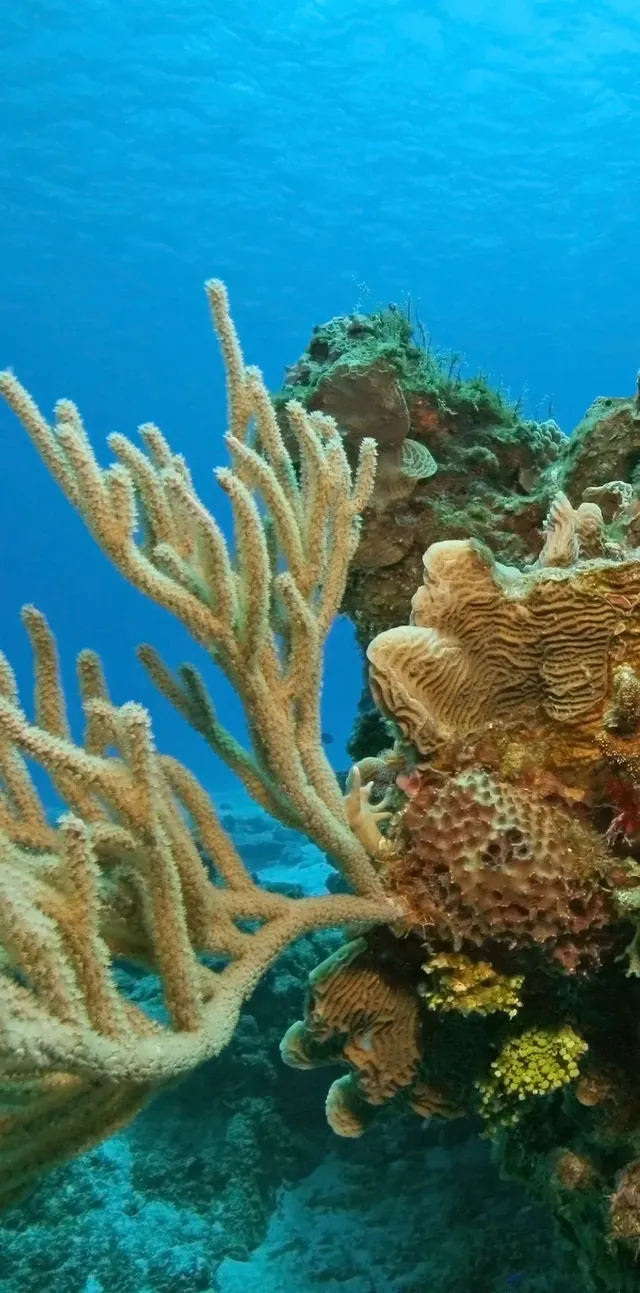
All this fauna lives thanks to the coral, and Cozumel's coral is among the best preserved in the Caribbean. The reef structure creates walls, caverns, swim-throughs and ledges where all this biodiversity takes shelter.
- Hard corals: brain, star, elkhorn, staghorn.
- Soft corals: sea fans and sea whips moving with the current.
- Giant barrel sponges, some over a metre wide.
- Lettuce corals and fire corals (best not to touch the latter).
💡 Mimi's tip
Dive at least two different sites in Cozumel to see varied marine life. Deep walls like Palancar Reef or Santa Rosa Wall hold different species than the shallower reefs like Paraíso or Chankanaab. A two-tank plan combining a wall and a shallower reef usually gives the best results.
How to dive Cozumel responsibly
Cozumel is a protected park and one of the reasons it stays so rich is precisely that divers respect the rules. These are the basics:
- Do not touch the animals, even if they look calm.
- Keep a respectful distance, especially with turtles and sharks.
- Control your buoyancy properly so you do not damage coral or stir up sediment.
- Do not chase animals —if they choose to come closer, they will.
- No gloves in Cozumel: the park regulations do not allow them (this stops people from holding on to the coral).
- Always follow the local guide's instructions.
→ We have a dedicated blog on buoyancy: buoyancy control in diving.
Conclusion
At Scuba Alux we run diving trips to Cozumel from Playa del Carmen. We work with local boats that know exactly where to find each species depending on the season. Tell us what you would like to see underwater —turtles, eagle rays, the splendid toadfish, a coral spawning event— and we adapt the plan to what you are after.
→ More info and bookings: Diving in Cozumel from Playa del Carmen.
Planning your day of diving in Cozumel?
Tell us which species you would love to see and we will put together the ideal dive plan.
Your questions answered
What marine life can you see diving in Cozumel?
In Cozumel it is common to see green and hawksbill turtles, eagle rays and stingrays, nurse sharks, groupers, snappers, moray eels, Caribbean lobsters and the splendid toadfish, an endemic species that only lives on Cozumel's reefs.
Is it easy to see sea turtles diving in Cozumel?
Yes. Cozumel is one of the best places in the Caribbean to see turtles: the chance of finding at least one on every dive is very high, especially on the southern reefs of the island.
Are there sharks in Cozumel?
Yes, though more discreetly than in Playa del Carmen. The nurse shark is the most common, resting under ledges and inside reef caves. For a direct encounter with bull sharks, the best option is the coast of Playa del Carmen from November to March.
What is the splendid toadfish of Cozumel?
It is an endemic fish species that only exists on Cozumel's reefs. It hides under ledges and cracks between 8 and 25 metres deep, and seeing it takes a good eye or a guide who knows exactly where to look.
When is the best time to see eagle rays in Cozumel?
Eagle rays are most frequent in winter, when waters cool down slightly. You can spot them swimming against the current in the blue or over the plateau on shallower dives.
Ready to discover Cozumel's marine life?
We organise your Cozumel diving day from Playa del Carmen, tailored to what you want to see.