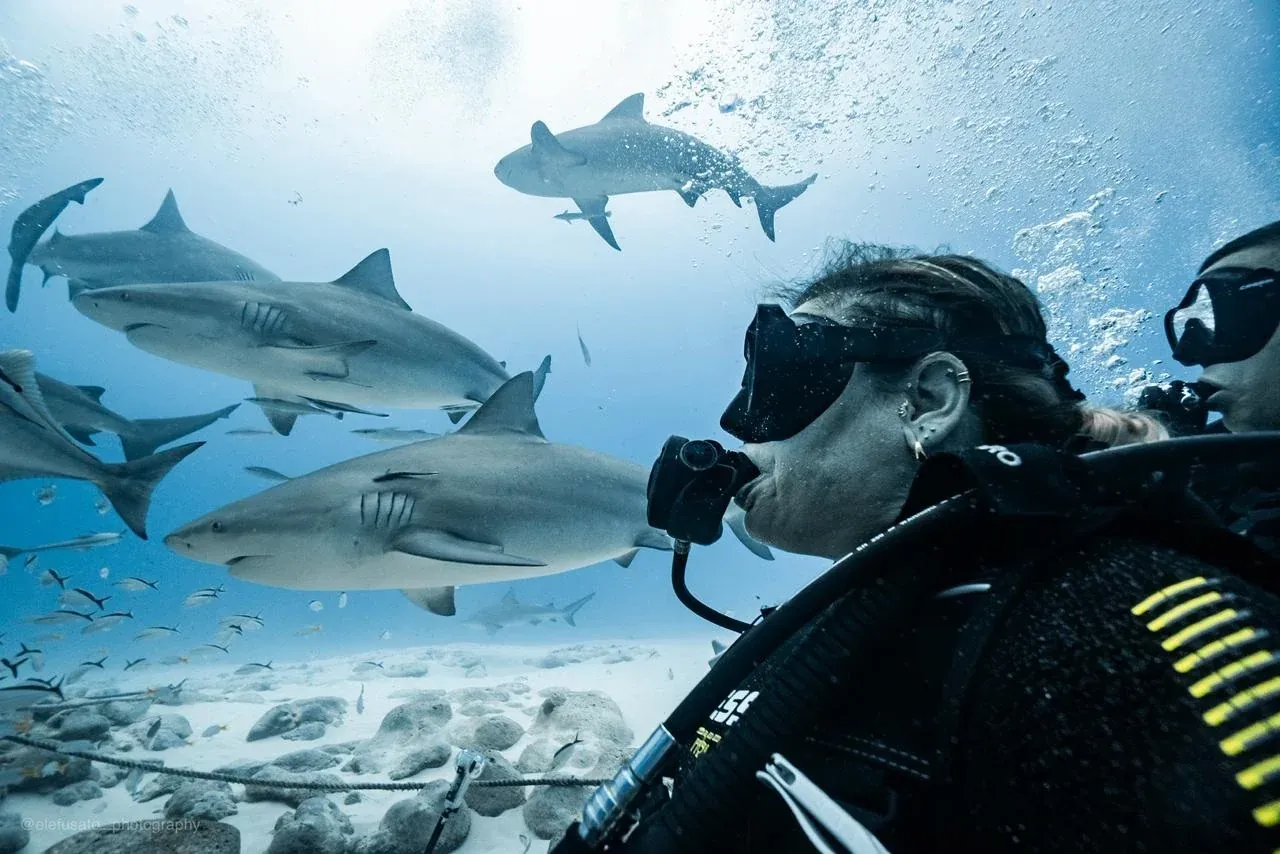
Bull sharks arrive in the waters of Playa del Carmen every year between November and March. An experience that can change the way you see the ocean forever.
A large number of females gather in these waters, enriched by freshwater from the cenotes, making Playa del Carmen a very special ecosystem. Thanks, among other factors, to the abundance of food and the protection these waters offer, pregnant female bull sharks return year after year.
If you are a certified diver from Open Water Diver level, you can enjoy diving alongside these powerful animals.
We offer two diving options: feeding dive and passive observation dive.
What is the difference between feeding and passive observation?
Feeding Dive Option
The feeding bull shark dive takes place at a depth of 23 meters and lasts approximately 35 minutes.
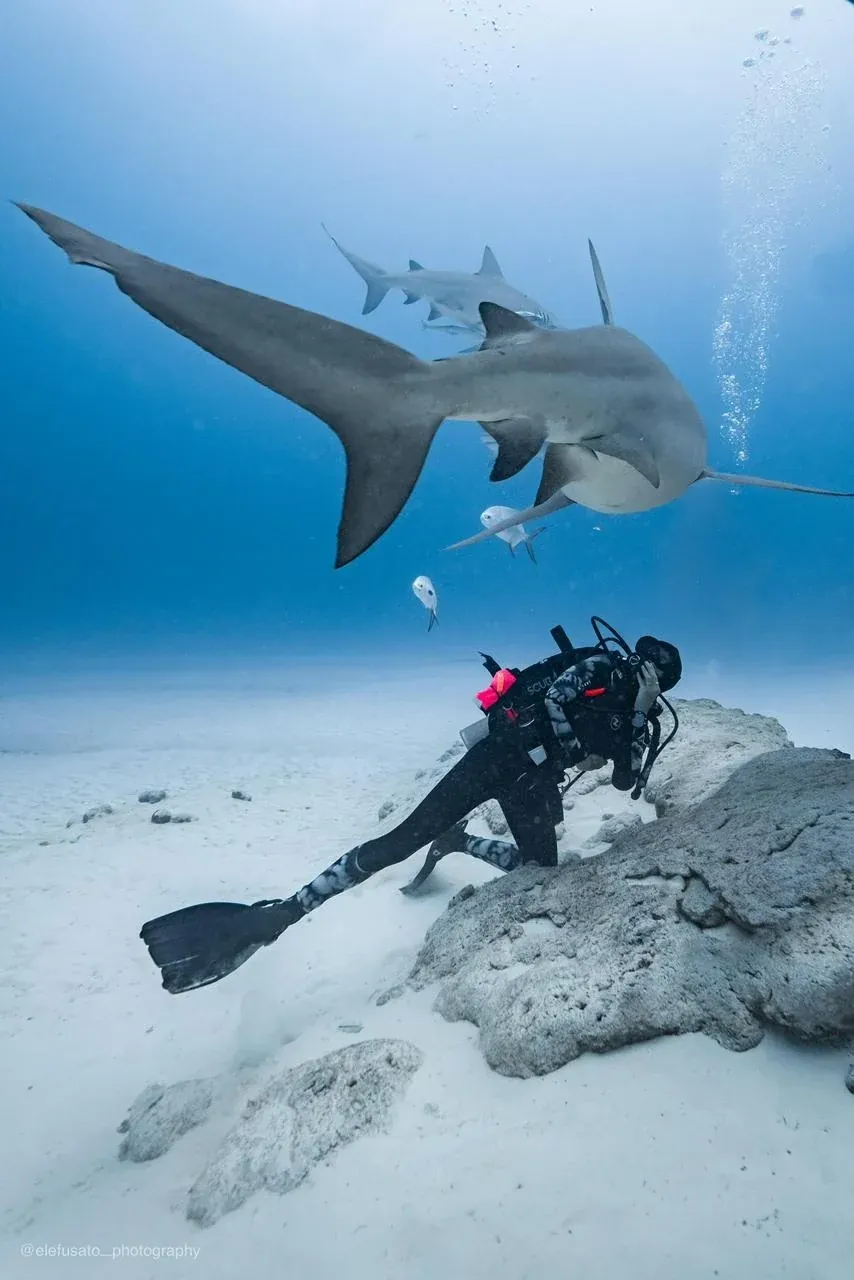
It is a static dive in front of the famous Mamitas Beach, where seeing the female bull sharks up close is very likely.
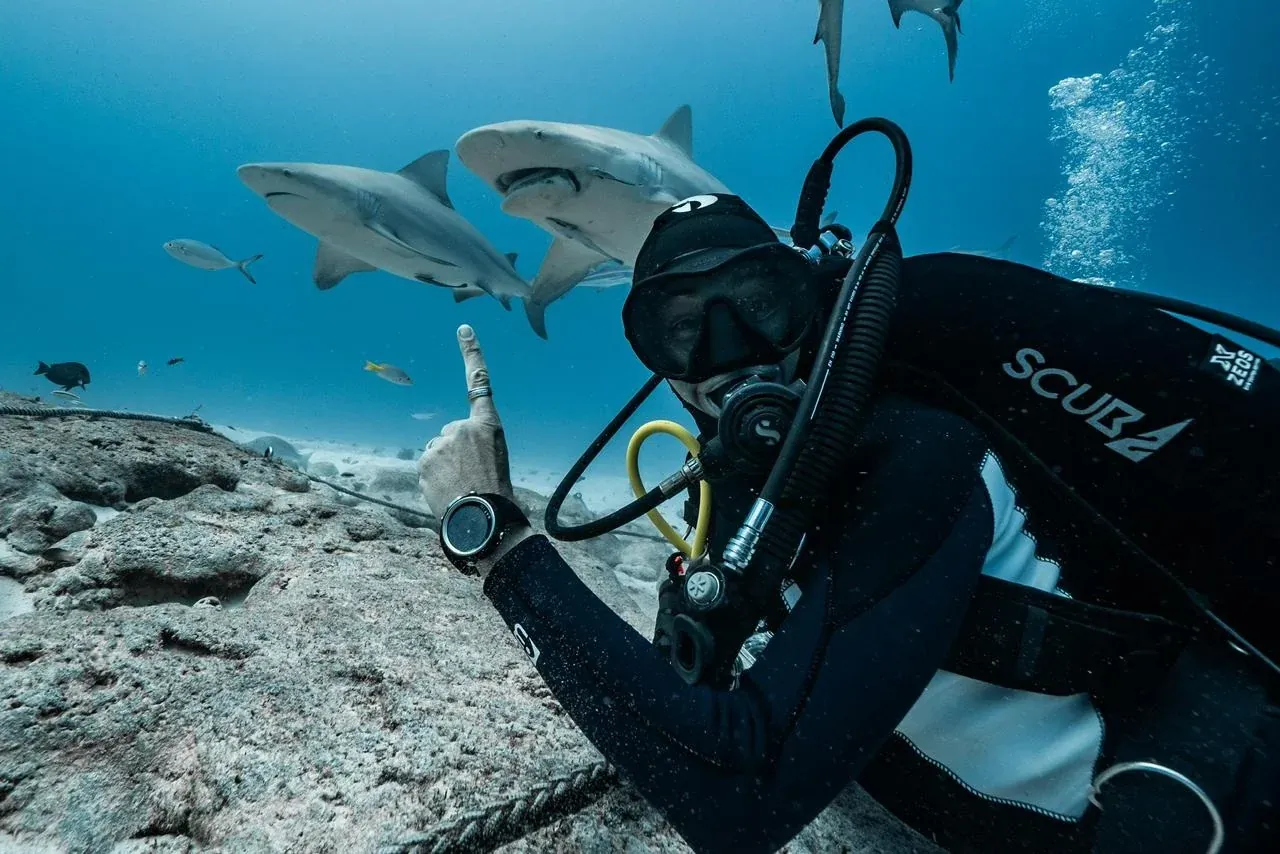
The experience is led by an expert feeder and two safety divers, who make sure you feel comfortable and safe at all times. There is also always a professional photographer capturing the best moments.
Bring your video camera and you’ll get spectacular footage.
Observation option
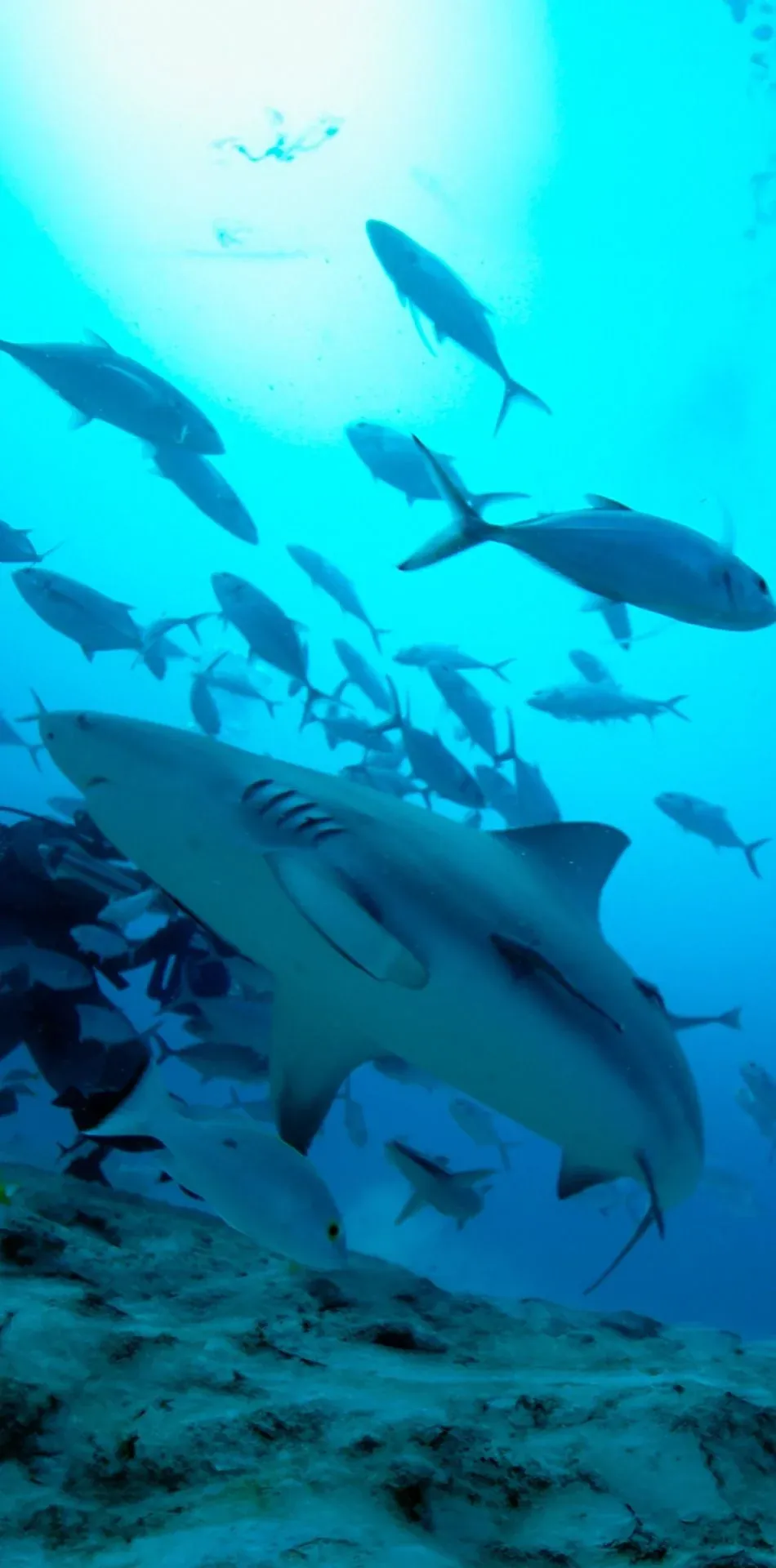
The observation option takes place at the same site as the feeding dive, but without human interaction. You can see calm female bull sharks, generally at a greater distance than during the feeding dive.
Important notice
Shark encounters are not guaranteed in either option. We work with wild animals, and nature always has the final say.
When is the best time to see bull sharks in Playa del Carmen?
Bull shark season runs from November to March, with peak sightings in January and February. During those months it is common to encounter between 20 and 40 sharks in a single dive.
The phenomenon has a clear biological explanation: pregnant female bull sharks are drawn to these waters because the freshwater from the Yucatan cenotes enriches the sea with minerals and nutrients that support their reproductive processes. Year after year, the same females return to the same spot off Mamitas Beach.
| Month | Sightings | Conditions |
|---|---|---|
| November | Good — season begins | Warm water, moderate current |
| December | Very good | Excellent visibility |
| January | 🔥 Peak season | 20–40 sharks per dive |
| February | 🔥 Peak season | 20–40 sharks per dive |
| March | Good — season ends | Water temperature starts rising |
Is it dangerous to dive with bull sharks?
Bull sharks have a reputation for being aggressive. The reality in this context is different: these are guided dives led by professionals with years of experience in this specific environment, with established safety protocols and a thoroughly understood animal behaviour pattern.
Dives take place between 15 and 23 metres, with excellent visibility and moderate current. There is always an expert feeder and two safety divers in the water at all times. The risk is minimal when protocols are respected.
What do I need to dive with bull sharks?
The minimum certification required is Open Water Diver. No additional specialty is needed. The most important thing is recent dive experience and comfort at 15–23 metres depth. Full equipment — BCD, regulator, tank, dive computer — is provided by Scuba Alux in perfect condition. Jewellery and shiny objects are not permitted during the dive.
We answer your questions
When is bull shark season in Playa del Carmen?
November to March, with peak sightings in January and February — typically 20 to 40 sharks per dive.
What certification do I need?
Open Water Diver is enough. No additional specialty required.
How many sharks will I see?
During peak season (January-February), between 20 and 40 bull sharks in a single dive off Mamitas Beach.
Is it dangerous?
Minimal risk when protocols are followed. There is always an expert feeder and two safety divers in the water.
Feeding dive vs passive observation?
In the feeding dive, a feeder attracts sharks at close range. In passive observation there is no bait — you watch natural behaviour undisturbed.
What if no sharks appear?
We work with wild animals. In the unlikely event of no sightings during season, we handle the situation with full transparency.
Can I combine with cenotes or Cozumel?
Yes. 4-5 days in Playa del Carmen allows you to combine bull sharks, cenote diving and a Cozumel day trip.
Ready for your next dive?
Contact us and we’ll help you plan the perfect diving experience for your level and goals.