Complete Guide 2026
Bull Shark Diving in Playa del Carmen
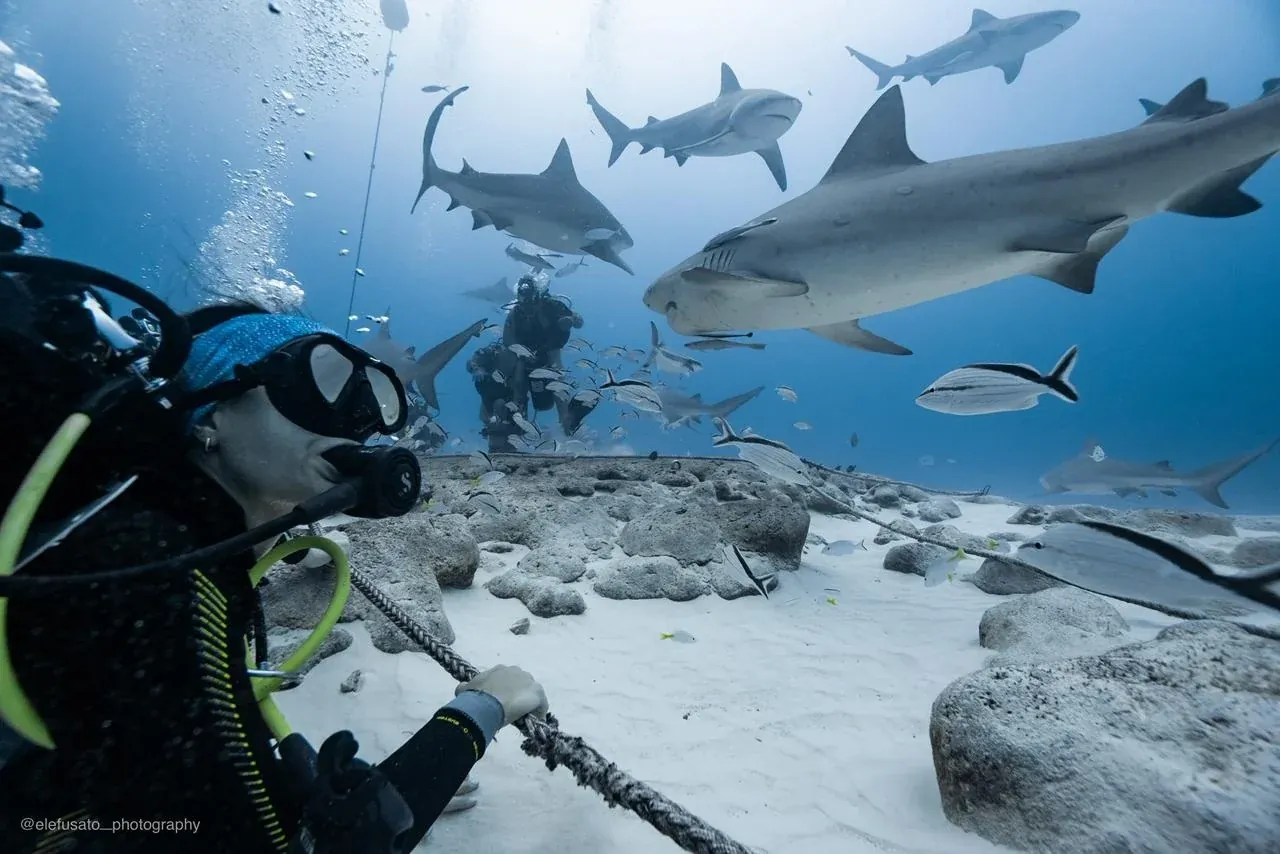
There are very few places in the world where you can reliably dive with bull sharks. Playa del Carmen is one of them — and arguably the best. Every year between November and March, dozens of pregnant female bull sharks arrive in the waters off Mamitas Beach, making this one of the most predictable and accessible large-shark encounters on the planet.
This guide covers everything you need to know before booking: when to go, what certification you need, how the dive works, whether it is safe, and how to choose the right dive centre.
Why do bull sharks come to Playa del Carmen?
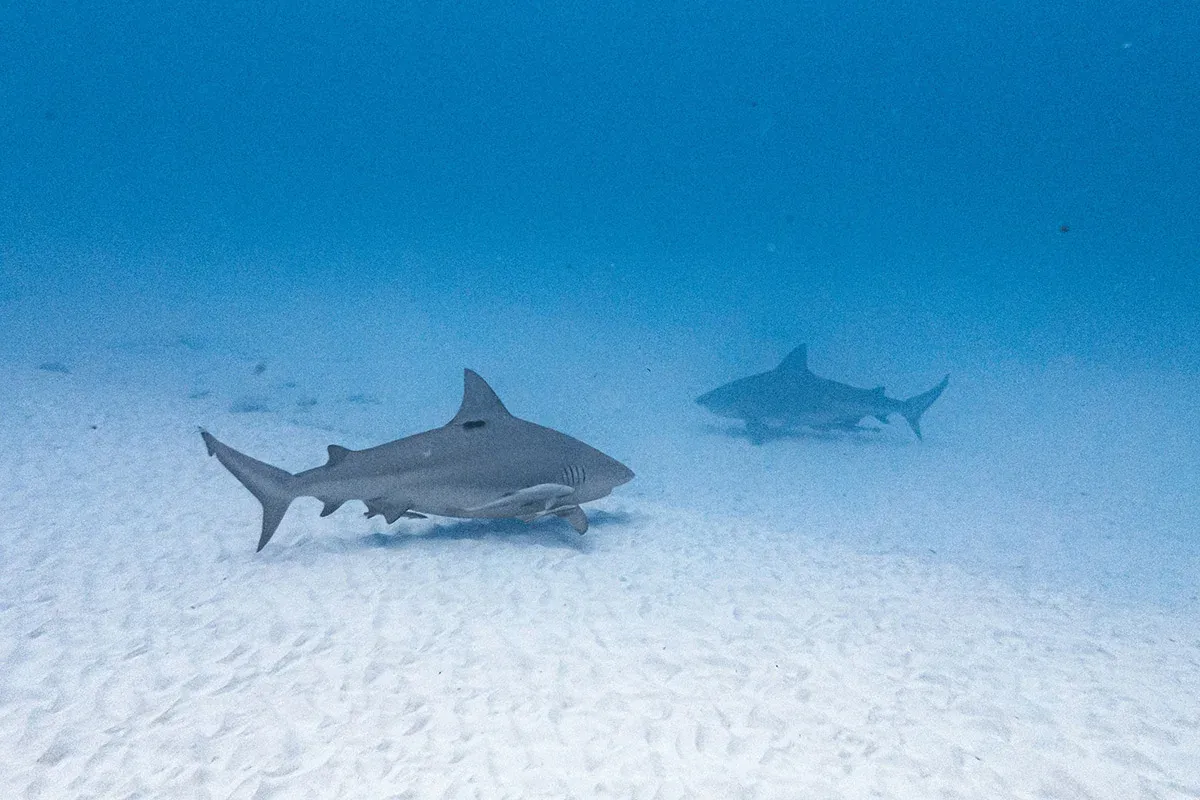
The phenomenon has a clear biological explanation. The Yucatan Peninsula sits on top of the world's largest network of freshwater underwater caves — the Ox Bel Ha system. These cenotes enrich the Caribbean Sea with minerals and nutrients that create ideal conditions for pregnant female bull sharks (Carcharhinus leucas) during their reproductive period.
Year after year, the same females return to the same stretch of water off Playa del Carmen. The behaviour is scientifically documented and has been studied for over two decades. This predictability is what makes the encounter so special — it is not a chance sighting. It is a natural annual event you can plan around.
When is bull shark season?
Season runs from November to March, with the peak in January and February. Here is a month-by-month breakdown:
| Month | Sightings | Conditions |
|---|---|---|
| November | Good — season begins | Warm water, first females arrive |
| December | Very good | Excellent visibility, growing numbers |
| January | 🔥 Peak season | 20–40 sharks per dive |
| February | 🔥 Peak season | 20–40 sharks per dive |
| March | Good — season ends | Numbers drop, water starts warming |
If your schedule allows, January or February give you the best chance of large encounters. That said, even in November and March the sightings are consistent enough to make the trip worthwhile.
What certification do you need?
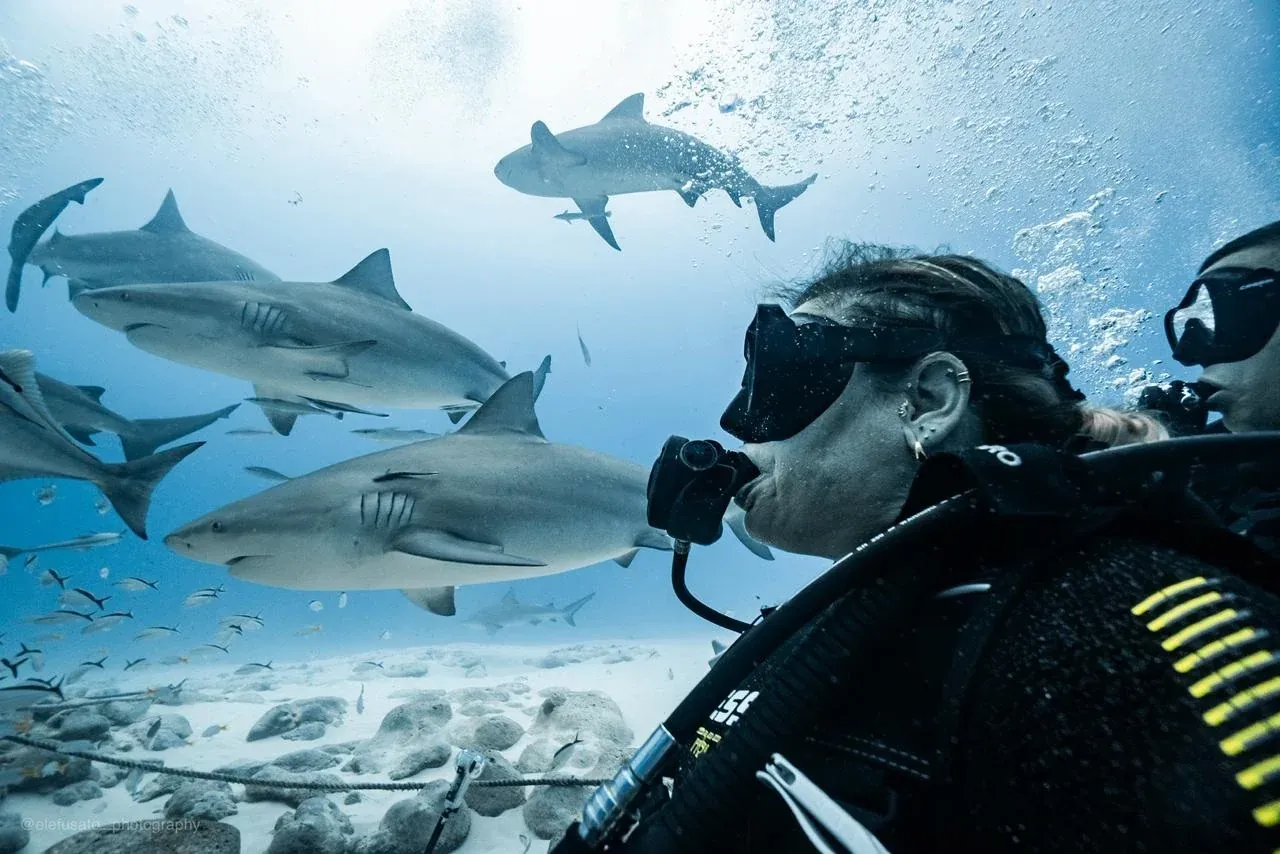
Open Water Diver is enough. No additional specialty or experience beyond your basic certification is required. The dive takes place between 15 and 23 metres, well within recreational limits, and is conducted as a stationary dive — you settle on the sand or hover in the water column and the sharks come to you.
What matters more than your certification level is recent experience. If you have not dived in the last six months, a refresher dive beforehand is strongly recommended. Comfort in the water, good buoyancy and the ability to stay calm are the most important factors.
How the dive works
The dive takes place off Mamitas Beach in Playa del Carmen, a short boat ride from shore. Depth is between 15 and 23 metres depending on conditions. There are two ways to experience the encounter:
Feeding dive
A professional feeder introduces controlled bait to attract the sharks within close range. Divers remain stationary in a semi-circle while the sharks approach naturally. This is the option that brings the animals closest to you — some passes happen at less than a metre. The dive is led by an expert feeder and two safety divers who manage the environment and ensure everyone is comfortable throughout.
Passive observation
No bait is used. You descend to depth and observe the sharks behaving naturally — patrolling, resting on the sand, moving in and out of the blue. The sharks tend to be at greater distance than in the feeding dive, but the behaviour is more natural and the atmosphere is calmer. Many experienced divers prefer this option.
Both modalities use the same safety protocols and professional team. The choice depends on what kind of encounter you are looking for.
Is it dangerous?
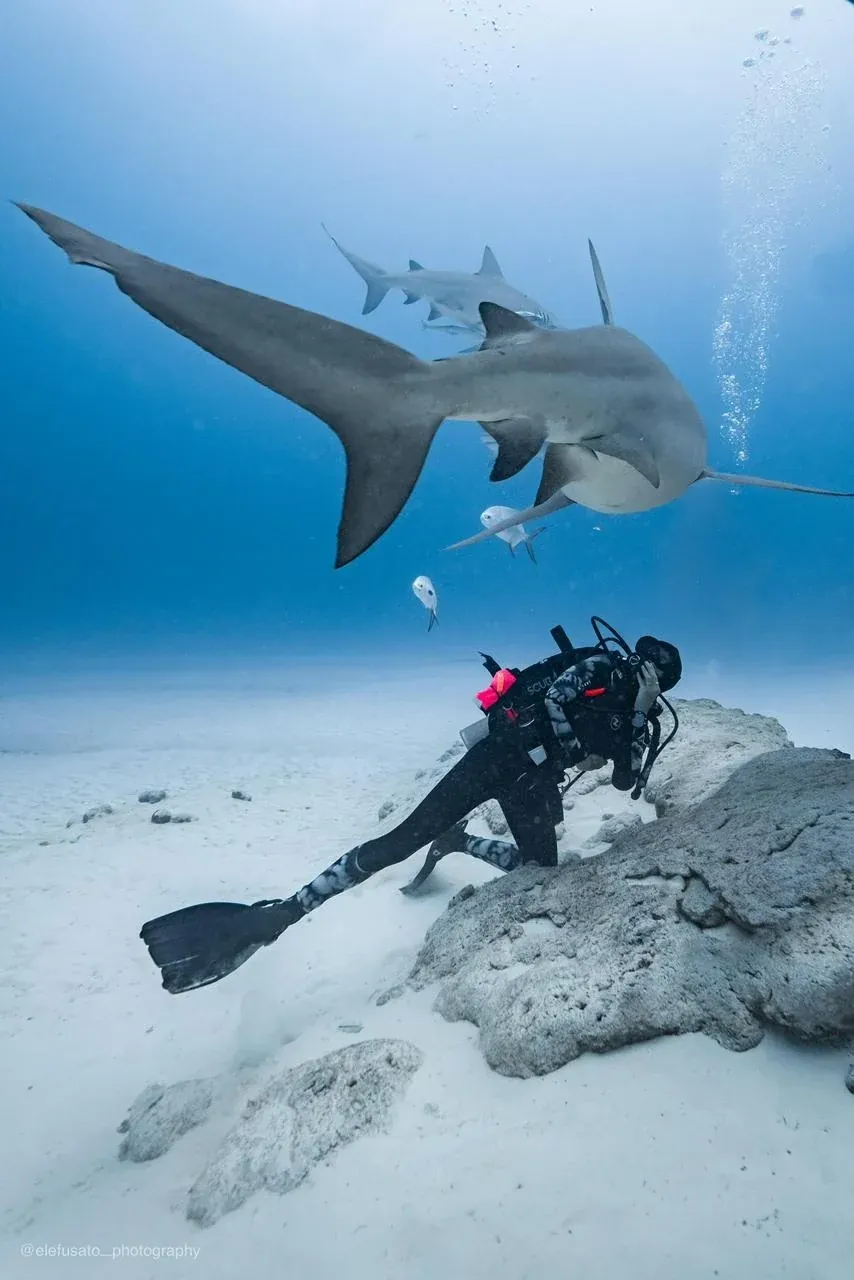
Bull sharks have a fearsome reputation — they are one of the three shark species most associated with incidents involving humans. In this specific context, however, the risk is minimal for a straightforward reason: the encounter is managed, guided and well understood.
The team at Scuba Alux has been conducting these dives for years. The behaviour of the females at this specific site is well documented. There are clear protocols for how divers enter the water, how they position themselves, and how they behave during the dive. When those protocols are followed, the animals are calm and predictable.
No encounter with wild animals carries zero risk. But the data and track record of bull shark dives in Playa del Carmen speak for themselves. The dive is regularly completed by Open Water certified recreational divers, including those diving with sharks for the first time.
What to expect on the day
Your dive centre will brief you thoroughly before entering the water. The briefing covers the biology of the sharks, what to expect underwater, how to position yourself, what not to do, and how the feeder and safety divers will manage the dive.
During the dive itself you will be asked to stay calm, maintain neutral buoyancy and avoid sudden movements. The sharks are not interested in the divers — they are focused on the food source or simply going about their natural routines. Staying still and watching is both the safest and the most rewarding approach.
Bring your camera. The conditions are usually excellent for underwater photography and the encounters make for extraordinary images.
Bull shark season — Month by month breakdown
Not all months of bull shark season are equal. Here is exactly what to expect at each point in the season so you can choose the best time for your trip:
| Month | Sightings | Water temp. | Notes |
|---|---|---|---|
| November | Good — season opens | 26-27°C | First females arriving, smaller groups |
| December | Very good | 25-26°C | Growing numbers, excellent visibility |
| January | 🔥 Peak season | 24-26°C | 5-15 sharks per dive — best month overall |
| February | 🔥 Peak season | 24-25°C | 5-15 sharks per dive — book well in advance |
| March | Good — season closing | 25-26°C | Numbers dropping, water warming up |
A 5mm wetsuit is recommended for January and February when water temperature drops to 24-25°C. For the rest of the season a 3mm is comfortable for most divers.
Feeding dive vs passive observation — Which should you choose?
This is the question we get asked most before the dive. Both are available at Scuba Alux and the answer depends entirely on what kind of experience you are looking for.
The feeding dive uses controlled bait at depth while divers remain stationary in a semicircle around the feeder. The sharks come very close — passes at under a metre are common. It is a high-adrenaline experience with guaranteed proximity to the animals. If it is your first time with bull sharks and you want an intense, close-up encounter, this is the one.
Passive observation involves no bait and no feeding — just divers and sharks sharing the same water. The sharks patrol the area naturally at greater distances. The atmosphere is calmer and the behaviour is unaltered. Many experienced divers prefer this option because it feels more like genuine wildlife observation and less staged. If you have dived with bull sharks before, passive observation often surprises you more.
| Feeding dive | Passive observation | |
|---|---|---|
| Proximity to sharks | Very close — under 1m | Greater distance, natural behaviour |
| Adrenaline level | High | Calm, immersive |
| Best for | First-timers, photographers | Experienced divers, wildlife lovers |
| Certification | Open Water minimum | Open Water minimum |
How to choose a dive centre
Not all dive operations in Playa del Carmen run bull shark dives the same way. Here are the things that matter most when choosing who to dive with:
- Experience at this specific site. The bull shark dives in Playa del Carmen require knowledge of the animals' behaviour at that location, not just general shark diving experience. Ask how many years the operation has been running these dives.
- Group size. Smaller groups mean better supervision, more space in the water and a calmer, more enjoyable experience. Avoid operations that run large groups for the sake of volume.
- Safety team. There should always be a dedicated feeder and at least two safety divers in the water — separate from your guide. If the operation does not clearly describe its safety setup, that is a red flag.
- Honest communication. No responsible operation can guarantee shark sightings — the animals are wild. Be cautious of any centre that promises guaranteed encounters without qualification.
- Reviews from divers, not aggregators. Check Google reviews and look for comments specifically about the bull shark dives. Recent first-hand experiences from certified divers are the most reliable source.
At Scuba Alux, Mimi and the team have been running bull shark dives in Playa del Carmen for years, working with small groups, providing full safety support and giving every diver the time and attention they need before and during the water. The 141 five-star Google reviews reflect that philosophy.
Combining bull sharks with other dives
Bull shark season (November to March) overlaps perfectly with some of the best conditions in the Riviera Maya for other types of diving. A typical 4 to 5 day trip might look like this:
- Day 1: Two cenote dives — Dos Ojos or Chac Mool for Open Water divers, El Pit or Angelita for Advanced.
- Day 2: Bull shark dive (morning). Afternoon free or second cenote.
- Day 3: Full day trip to Cozumel — two reef dives on the Mesoamerican Barrier Reef.
- Day 4: Second cenote day with different sites.
At Scuba Alux we help you build the right itinerary for your certification level, experience and what you want to get out of the trip. Get in touch and we will put it together with you →
→ Book your bull shark dive in Playa del Carmen
Planning a trip to Playa del Carmen this season?
Bull shark season fills up quickly, especially January and February. Contact Scuba Alux and we will confirm availability, answer your questions and help you plan every dive of your trip.
We answer your questions
When is bull shark season in Playa del Carmen?
Bull shark season runs from November to March, with peak sightings in January and February. During those months it is common to encounter 20 to 40 sharks in a single dive off Mamitas Beach.
Is it dangerous to dive with bull sharks?
The risk is minimal when safety protocols are followed. Dives are led by professionals with years of experience in this specific environment, always with an expert feeder and two safety divers. The encounter is regulated and has a very strong safety record over many years of operation.
What certification do I need?
Open Water Diver is the minimum requirement. No additional specialty is needed. What matters most is recent dive experience and comfort at 15 to 23 metres depth. A refresher dive is recommended if you have not been in the water recently.
What is the difference between the feeding dive and passive observation?
In the feeding dive, a professional feeder uses controlled bait to bring the sharks within close range — some passes happen at under a metre. In passive observation there is no bait: you watch the sharks behave naturally at greater distance. Both use the same safety protocols and professional team.
How many bull sharks will I see?
During peak season (January and February) it is common to encounter between 20 and 40 bull sharks in a single dive. Numbers in November, December and March are still good, though slightly lower. This is not a chance encounter — it is a predictable, scientifically documented annual event.
Can I combine bull shark diving with cenotes or Cozumel?
Absolutely. With 4 to 5 days in Playa del Carmen you can comfortably combine a bull shark dive, cenote diving and a full day trip to Cozumel. At Scuba Alux we help you build the perfect itinerary for your level and dates.
Ready for your next dive?
Contact us and we'll help you plan the perfect diving experience for your level and goals.