Riviera Maya diving · Comparison guide
Diving in Playa del Carmen: Cenotes vs Caribbean
Diving in Playa del Carmen is one of the main reasons many travellers choose the Riviera Maya. Few destinations allow you to combine Caribbean reefs, freshwater cenotes and iconic marine encounters in the same trip.
But when it is time to plan your dives, one question comes up again and again: is it better to dive in cenotes or in the Caribbean Sea?
The short answer is that there is no single best option for everyone. They are completely different experiences, and both can fit perfectly into the same scuba diving trip. Cenote diving offers a unique geological setting, crystal-clear freshwater, rock formations, light beams and a very special sense of silence. Caribbean diving, on the other hand, connects you with marine life, coral reefs, open blue water and the energy of the sea.
In this guide we compare 10 differences between cenote diving and Caribbean diving so you can decide which experience suits you best when planning a Riviera Maya diving trip.
Quick summary
- Cenotes: freshwater, caverns, filtered light, calm water and underground landscapes.
- Caribbean and Cozumel: reefs, marine life, currents, colour and open-water feeling.
- Best choice: combine both experiences if you have several diving days.
Cenote diving vs Caribbean diving: two worlds in one trip
One of the biggest advantages of diving in Playa del Carmen is that you do not have to choose only one type of underwater experience. From this area, you can easily access both the cenotes of the Riviera Maya and dives in the Caribbean Sea.
Cenotes are located inland, surrounded by jungle, and are part of one of the largest underground river systems in the world. The Caribbean, by contrast, takes you to reefs, sandy bottoms, walls, gentle to moderate currents and tropical marine life.
So rather than comparing them to eliminate one option, it is more useful to understand what each one offers. If you want to learn more about freshwater dives, visit our cenote diving page. If you are more attracted to reef diving and open water, you can also explore our Cozumel diving trips.
1. Type of environment
The first major difference is the setting.
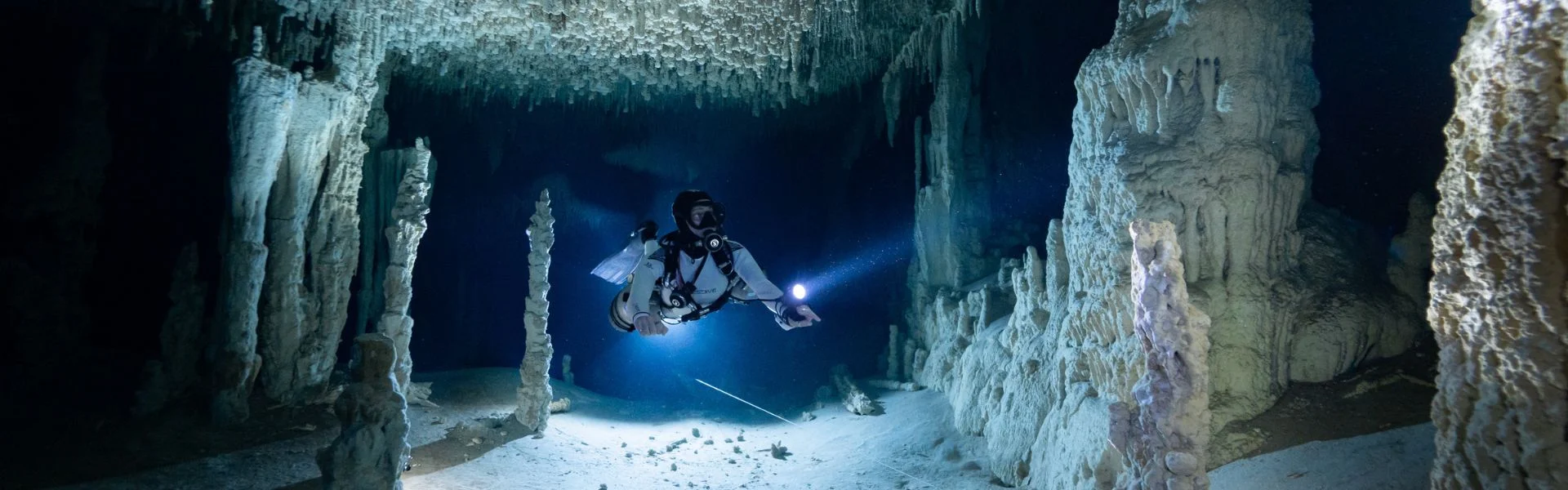
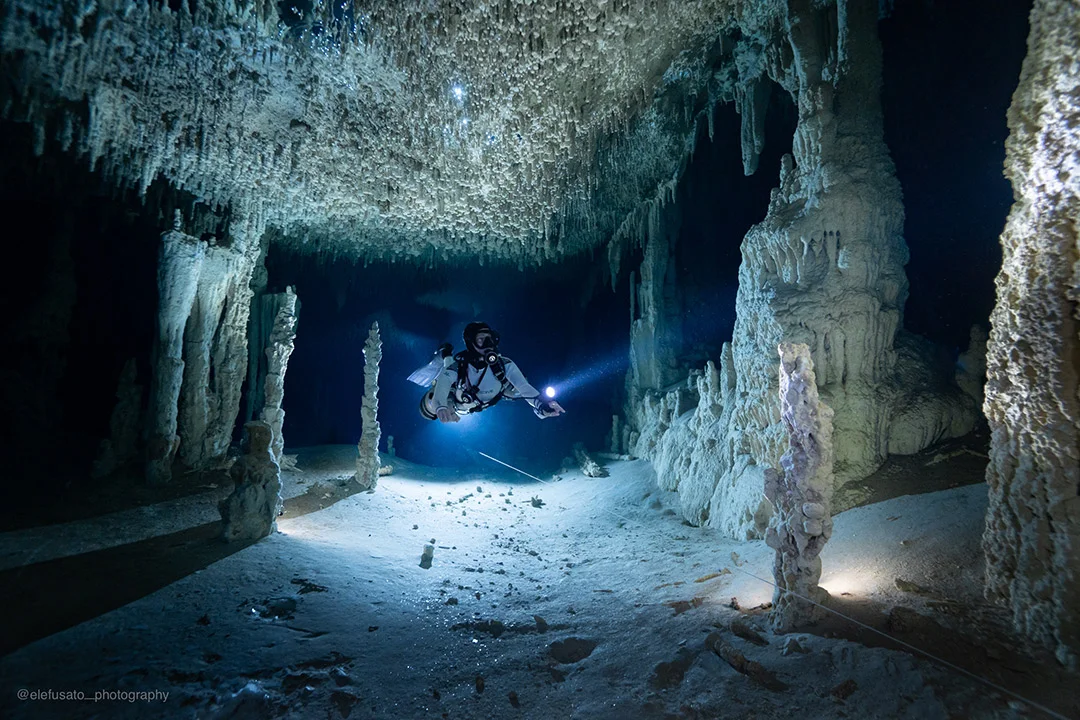
Cenote diving takes place in freshwater, inside natural formations created over thousands of years. You are not diving on a reef, but in an underground landscape with light entrances, tunnels, caverns, stalactites, stalagmites and limestone walls.
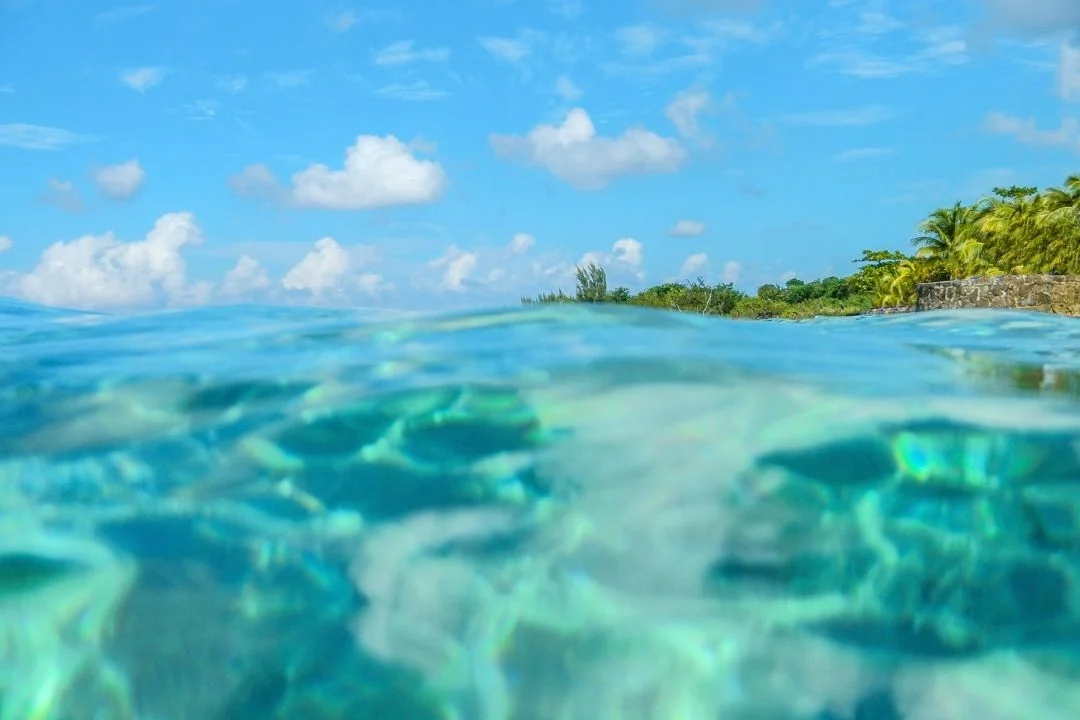
Caribbean diving takes place in the sea, either along the coast or around islands such as Cozumel. The environment is made of coral reefs, sandy bottoms, channels, walls and structures full of marine life.
- Cenotes: rock, freshwater, caverns and filtered natural light.
- Caribbean: reefs, open blue water, coral and tropical marine life.
Both are part of the identity of Riviera Maya diving, but they create completely different sensations underwater.
2. Underwater visibility
Visibility is one of the strongest attractions of the cenotes. Because they are freshwater environments protected from waves, the water can be incredibly clear. In many cenotes, the sensation is almost like flying through a natural cathedral of water.
The Caribbean can also offer excellent visibility, especially around Cozumel or on calm sea days. However, because it is open water, conditions can change more due to wind, swell, currents or suspended particles.
For travellers looking for a highly visual and unusual dive, cenotes usually make a very strong first impression because they feel completely different from any open-water dive.
3. Light and atmosphere
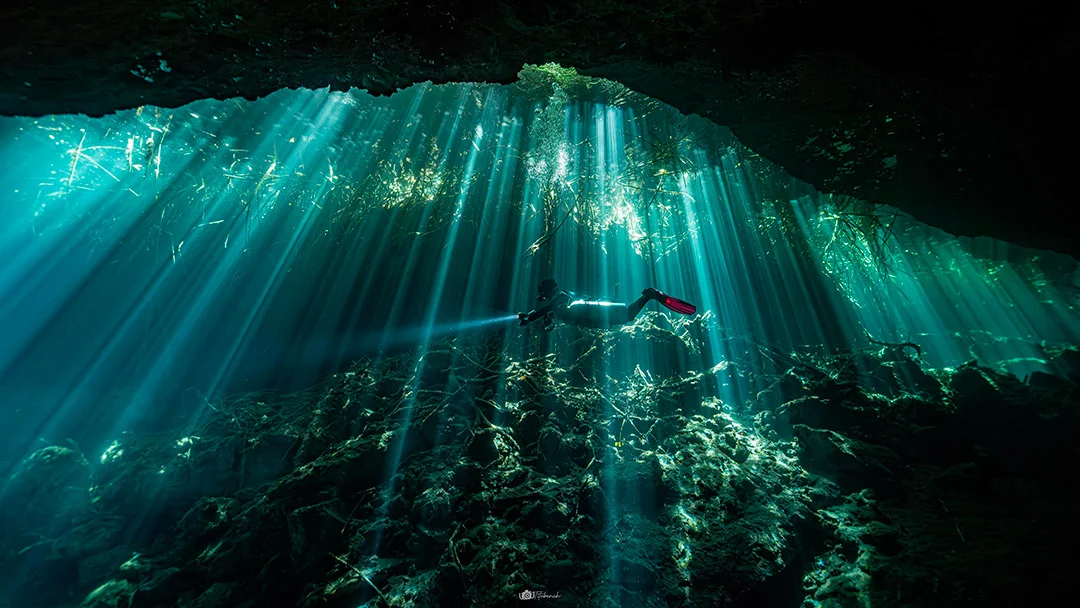
Cenote diving has an atmosphere that is hard to compare with any other type of dive. Light enters through natural openings and creates beams that cut through the water. The mix of shadow, rock and clarity creates a very distinctive experience.
In the Caribbean, light is more open and expansive. The sun illuminates the reef, the colours of the coral, tropical fish and the blue of the sea. It is brighter, more dynamic and closer to the classic image of tropical scuba diving.
If you are looking for a more quiet, almost meditative dive, cenotes may be your choice. If you prefer colour, movement and marine life, the Caribbean has a lot to offer.
4. Marine life
This is where the Caribbean clearly stands out in terms of visible species during the dive.
In the Caribbean Sea you may see tropical fish, turtles, rays, moray eels, schools of fish, corals and, depending on the area and season, larger species. You can also combine your trip with dives in Cozumel, one of the best-known reef destinations in the Mexican Caribbean.
In cenotes, marine life is not the main attraction. You may see small fish, roots, haloclines and interesting natural details, but the experience focuses more on geology, light, visibility and the feeling of exploring a hidden world.
If your priority is animals, reefs and movement, you will probably enjoy Caribbean diving more. If you are looking for a quiet, unique and visually different experience, cenotes are essential.
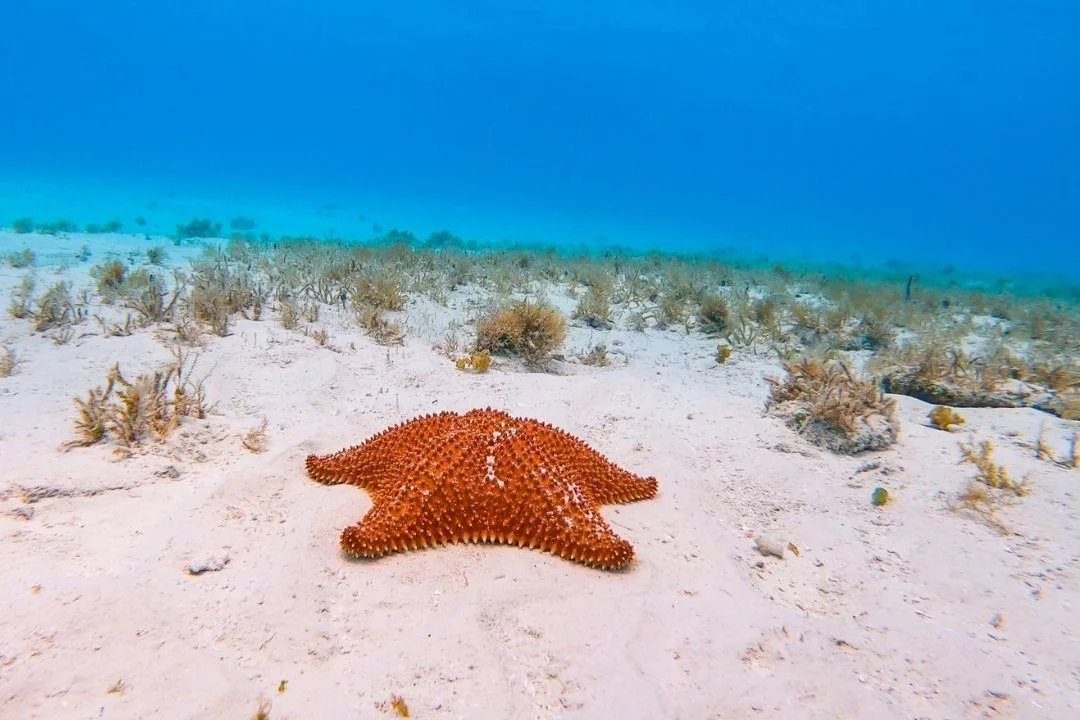
Cozumel feeling
Cozumel is ideal if you want reef landscapes, clear water and the classic Caribbean diving experience with a stronger open-sea feeling.
5. Currents and conditions
Another important difference is the type of conditions you can expect.
Cenotes are usually environments with little or no current. This allows for slow, controlled dives at a calm pace. Even so, they require respect, good buoyancy and following your guide’s instructions at all times.
In the Caribbean, conditions can vary more. You may have current, swell or changes in visibility. In areas such as Cozumel, drift diving is part of the experience: you enter the water at one point and let the current move you along the reef, usually exiting in a different place.
This does not mean that one option is always harder than the other. They are simply different ways of diving.
6. Recommended experience level
You do not need to be a technical or cave diver to enjoy recreational cenote diving. Many cenotes can be dived with an Open Water certification, as long as the activity is led by a qualified guide and stays within recreational cavern-diving limits.
However, good buoyancy, fin control and comfort underwater are strongly recommended. In cenotes, the goal is not speed. The goal is calm, precision and control.
In the Caribbean, the recommended level depends on the dive site. Some dives are suitable for less experienced divers, while others are better for advanced divers, especially when there is current, depth or more demanding conditions.
If this is your first diving trip to Playa del Carmen, the best approach is to speak with a local dive centre and choose your dives according to your certification, recent experience and comfort level.
7. Sensations during the dive
Cenote diving often creates a feeling of silence, calm and focus. The environment invites you to notice the details: the light, the shapes of the rock, the clarity of the water, bubbles on the cavern ceiling or the subtle changes between water layers.
Caribbean diving has a different energy. It is more open, more alive and more changeable. There is more movement, more colour and more stimulation around you. One moment you may be watching a reef full of fish, and the next you may be looking into the blue hoping to see a turtle or a ray pass by.
For many divers, the best experience is precisely to combine both feelings during the same trip.
8. Underwater photography and video
If you like underwater photography, both cenotes and the Caribbean have huge potential, but they require different approaches.
In cenotes, the key is to work with natural light, silhouettes, contrast and composition. Images often look clean, dramatic and minimal. A diver framed against a beam of light can become a powerful photograph.
In the Caribbean, photography is more about colour, wildlife, coral, movement and reef scenes. Here, getting close to your subject, using artificial light if you carry photo equipment and capturing marine life in motion become more important.
For travellers, content creators or divers who want strong visual memories, Playa del Carmen offers a very complete combination.
9. Logistics from Playa del Carmen
Playa del Carmen is a very practical base for organising different types of dives.
For cenotes, you usually travel by road to different points of the Riviera Maya. The distance depends on the cenote, but many are relatively close to Playa del Carmen, Tulum or the area between both towns.
For Caribbean diving, trips can depart from the coast. If you want a special reef experience, you can also organise a diving day in Cozumel. From Playa del Carmen, it is common to combine transport and boat logistics to reach the dive sites.
You can also read our guide to diving in Playa del Carmen, cenotes, Cozumel and sharks, where we explain how to combine different experiences in the area.
10. Which experience should you choose?
The best choice depends on what you want from your trip.
Choose cenote diving if:
- You want an experience that feels completely different from reef diving.
- You are attracted to geology, light and underground landscapes.
- You want very clear water and a calm dive.
- You are interested in silhouettes, light beams and contrast photography.
- You have already dived on reefs and want to try something new.
Choose Caribbean diving if:
- Your priority is marine life.
- You like coral reefs and tropical fish.
- You prefer open spaces and a stronger sea feeling.
- You want to combine Playa del Carmen with Cozumel.
- You are looking for the classic tropical scuba diving experience.
If you have several days available, the best recommendation is not to choose only one. The real value of diving in Playa del Carmen is that you can experience both.
What if you combine cenotes, Caribbean diving and Cozumel?
For a complete Riviera Maya diving trip, a good plan can include:
- One day of cenote diving.
- One day of diving in Cozumel.
- A seasonal dive with whale sharks or bull sharks, if your travel dates match the season.
This way, you experience freshwater, reef, open sea and some of the most representative underwater landscapes of the Mexican Caribbean.
Working with a local dive centre also helps you choose the best days according to conditions, level, season and the type of experience you want.
At Scuba Alux, the goal is to help every diver discover Playa del Carmen safely, personally and according to their level. Whether you are travelling for your first dives in Mexico or you already have experience, the area offers many options for a complete diving trip.
Conclusion
Diving in Playa del Carmen stands out because it allows you to combine two very different worlds: freshwater cenotes and the Caribbean Sea. Cenotes offer a quiet, visual and unique experience shaped by light, rock and crystal-clear water. The Caribbean connects you with marine life, reefs, open blue water and the energy of the ocean.
It is not about deciding which one is better. It is about understanding what you want to experience on each dive.
If you are planning a Riviera Maya diving trip, the ideal option is to combine both and let each one show you a different side of Playa del Carmen.
Would you like to organise your cenote or Cozumel dives? Contact Scuba Alux and we will help you create a diving plan adapted to your level, dates and the kind of underwater experience you are looking for.
Related articles
Your questions answered
Is cenote diving better than Caribbean reef diving?
It depends on the experience you want. Cenotes are ideal for crystal-clear freshwater, rock formations and light effects. Caribbean diving is better if you want reefs, tropical fish and more marine life.
Can I dive in cenotes with an Open Water certification?
Yes, some recreational cenotes are suitable for Open Water divers when guided by a qualified professional and kept within recreational cavern-diving limits. Good buoyancy control is strongly recommended.
How many days do I need for diving in Playa del Carmen?
At least three diving days are recommended if you want to combine cenotes, Caribbean reefs and Cozumel. With more time, you can add seasonal dives or repeat your favourite experience.
Shall we plan your diving trip?
Contact Scuba Alux and we will organise your cenote, Cozumel or Playa del Carmen dives according to your level, dates and what you want to experience underwater.