Shark guide · Riviera Maya
Can You Dive with Sharks in the Riviera Maya?
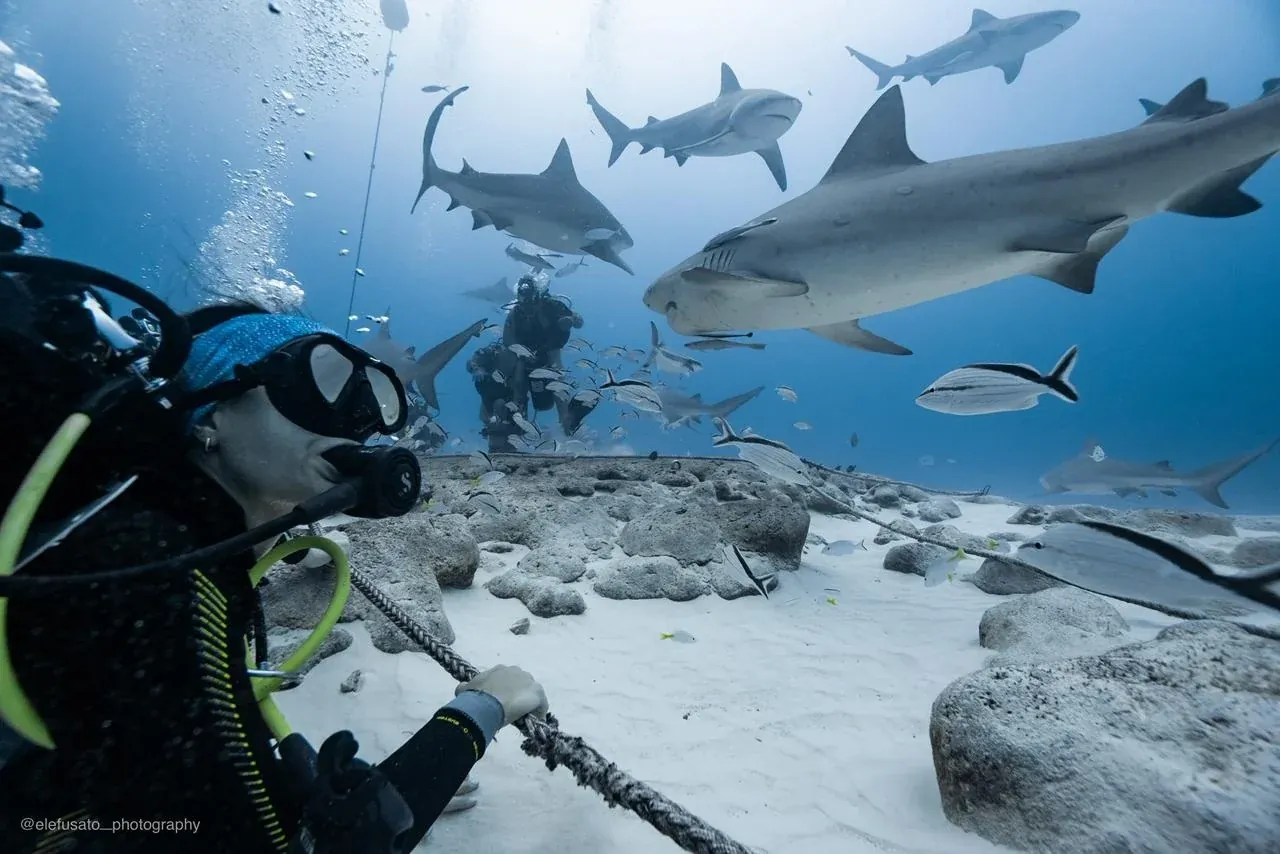
Yes. The Riviera Maya is one of the few places in the world where you can dive with different shark species throughout the year — from the majestic bull shark in winter to the whale shark in summer, with hammerhead sharks, nurse sharks and reef species present all year round. And all of it just minutes by boat from Playa del Carmen.
This guide answers the most common questions: what sharks live in the Riviera Maya, when you can see them, whether it is dangerous and what you need to dive with them.
What sharks are there in the Riviera Maya?
Bull shark (Carcharhinus leucas) — November to March
The undisputed star of winter in Playa del Carmen. Pregnant females arrive each year to the waters off Mamitas Beach, drawn by the nutrients the cenotes bring to the sea. It is the only place in the world where you can predictably dive with bull sharks in open water next to an urban beach. At peak season — January and February — it is common to see between 5 and 15 individuals on a single dive.
→ Everything about bull shark diving in Playa del Carmen
Whale shark (Rhincodon typus) — May to September
The largest fish on the planet visits Riviera Maya waters every summer to feed on the plankton that surfaces at this time of year. This is not a scuba diving experience — it is done by snorkelling — but it is one of the most powerful wildlife encounters on the planet. In the peak months of July and August, dozens of individuals can gather in the same area.
→ Everything about whale shark snorkelling in the Riviera Maya
Hammerhead shark (Sphyrna lewini) — Occasional sightings
The hammerhead shark is one of the most coveted sightings in the Riviera Maya. While there is no defined season or fixed location where they concentrate as there is with the bull shark, sightings occur with some frequency on deeper reef dives — particularly in Cozumel and at the more offshore dive sites.
Its silhouette is unmistakeable — the hammer-shaped head with eyes at each end gives it an appearance that stays with you. They are shy animals that tend to move away from divers, which makes every sighting a special moment. There are no guarantees of seeing them, but their presence in the waters of the Mexican Caribbean is well known among local instructors.
Nurse shark (Ginglymostoma cirratum) — Year-round
The most common shark on reef dives in Playa del Carmen and Cozumel. A calm, nocturnal animal that spends the day resting on the bottom among coral formations. Its appearance — up to 3 metres long, robust brown body — can surprise those who do not expect it, but its temperament is completely peaceful.
Whitetip reef shark (Triaenodon obesus) — Year-round
More common in Cozumel than in Playa del Carmen. Usually seen in small groups patrolling reef currents. A curious animal that occasionally approaches divers without showing any aggressive behaviour.
Summary table — Sharks by season
| Species | When | Where | Activity |
|---|---|---|---|
| Bull shark | November — March | Mamitas Beach, PDC | Scuba (OW minimum) |
| Whale shark | May — September | Isla Mujeres / Cancún | Snorkel (no cert.) |
| Hammerhead shark | Occasional sightings | Cozumel & offshore reefs | Recreational diving |
| Nurse shark | Year-round | PDC & Cozumel reefs | Recreational diving |
| Whitetip reef shark | Year-round | Cozumel mainly | Recreational diving |
Are there sharks in cenotes?
No. The cenotes of the Riviera Maya are freshwater systems and sharks are marine animals that cannot survive in freshwater. Casa Cenote is a coastal cenote with a direct connection to the sea through a mangrove channel — its water is brackish and occasional small coastal species may appear. But this is not comparable in any way to shark diving in the open sea.
What you do find in cenotes is freshwater fauna: fish, turtles and, in some cases like Casa Cenote, crocodiles.
Is it dangerous to dive with sharks in the Riviera Maya?
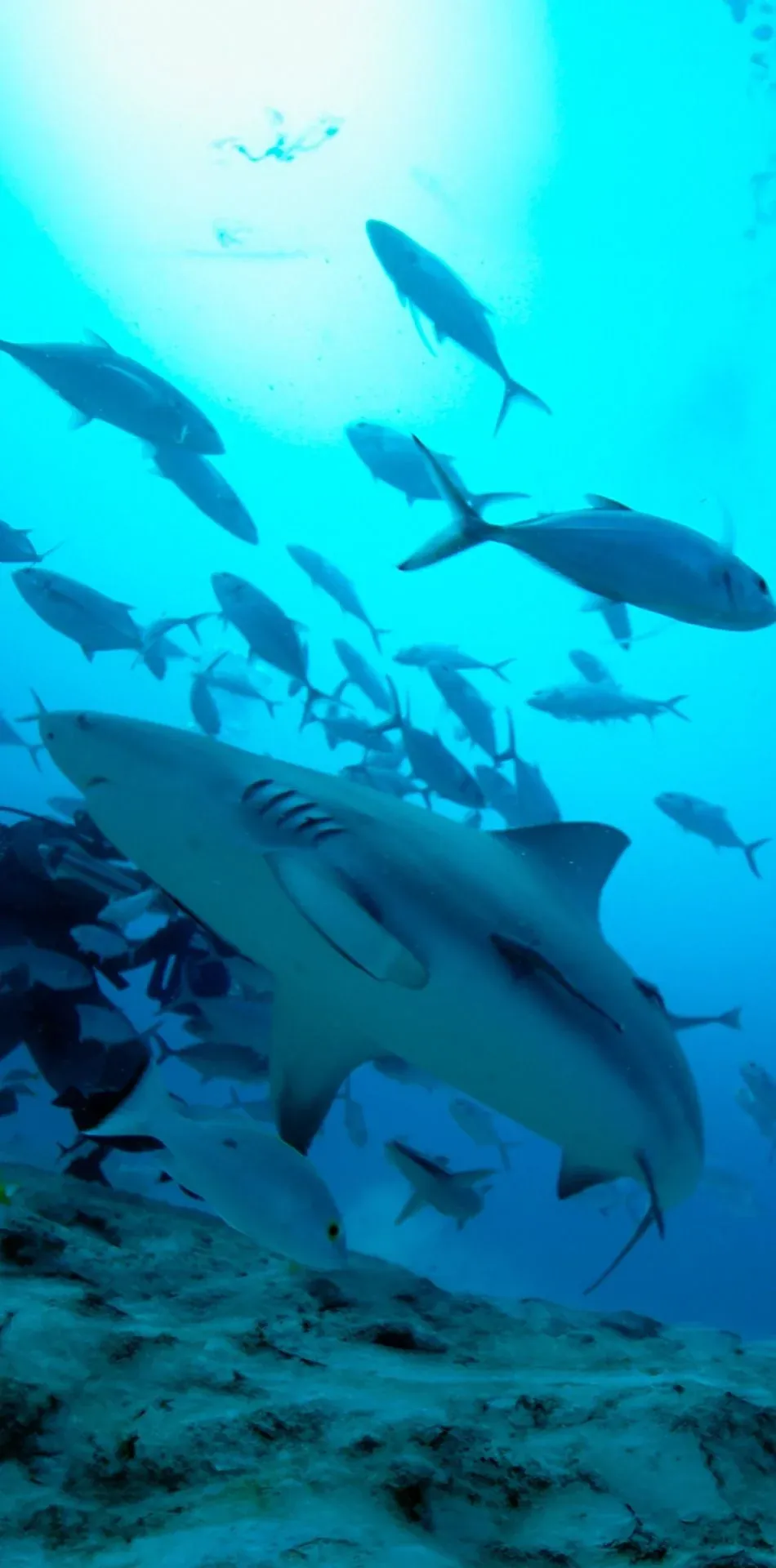
The honest answer is: the risk is minimal when dives are properly organised and protocols are followed. The bull shark has a fearsome reputation, but the encounter in Playa del Carmen has been conducted for decades with a very strong safety record. The hammerhead is a shy animal that generally avoids divers. Nurse and reef sharks represent no practical risk. Whale sharks are completely harmless.
Want to dive with sharks in the Riviera Maya?
At Scuba Alux we organise bull shark dives (November-March) and whale shark snorkelling tours (May-September). Tell us when you are travelling and we will put together the perfect plan.
We answer your questions
Are there sharks in the Riviera Maya?
Yes. Bull sharks (November-March), whale sharks (May-September, snorkelling), hammerhead sharks (occasional sightings) and nurse and reef shark species year-round.
Is it dangerous to encounter sharks in the Riviera Maya?
Not in the context of organised diving. Bull shark dives use certified guides and proven safety protocols. Hammerhead sharks tend to avoid divers. Nurse and reef sharks are calm animals.
Are there sharks in cenotes?
No. Cenotes are freshwater systems. Sharks are marine animals. Casa Cenote has brackish water with a sea connection and may receive occasional coastal visitors.
When is bull shark season in Playa del Carmen?
November to March, peaking in January and February. It is common to see 5-15 sharks on a single dive off Mamitas Beach.
What certification do I need to dive with sharks?
Open Water Diver is sufficient, though Advanced is recommended for bull sharks. No certification for whale shark snorkelling — just the ability to swim. Hammerhead, nurse and reef sharks are encountered on standard recreational dives.
Ready for your shark encounter?
Contact Scuba Alux and we will help you plan the perfect experience for your level and travel dates.